
Pixels
Pixels is described as an MMORPG Pixel NFT game that allows players to engage in farming and community-building activities in a pixelated world. It promotes...

Built by Gamers. Fueled by Crypto.

Crypto games, also known as blockchain games, have rapidly evolved from experimental prototypes into one of the fastest-growing segments of the global gaming industry. By combining traditional gameplay with on-chain ownership, tokenized economies, and decentralized marketplaces, crypto games are reshaping how players interact with digital worlds and extract value from play.
Once dismissed as speculative or overly complex, crypto games in 2025 now attract tens of millions of active users worldwide. Improvements in user experience, mobile accessibility, and sustainable game economies have fueled this growth, positioning crypto gaming as a long-term pillar of interactive entertainment rather than a passing trend.
Experimental foundations (2017–2020)
The earliest crypto games, such as NFT-based collectibles and simple browser games, proved that digital asset ownership could exist on-chain. However, slow networks, high transaction fees, and shallow gameplay limited adoption to crypto enthusiasts.
Play-to-earn explosion (2021)
During the 2021 crypto bull market, play-to-earn (P2E) games reached mainstream visibility. Millions of users joined crypto games for the first time, motivated by token rewards and NFT ownership. At its peak, blockchain gaming accounted for over 40% of all blockchain activity, surpassing DeFi in daily transactions.
Infrastructure and design maturity (2022–2024)
Following market corrections, developers pivoted toward long-term sustainability. Layer-2 scaling solutions, alternative blockchains, and integrated wallets dramatically reduced friction. Game design shifted away from pure earning mechanics toward engagement, progression, and competitive depth.
Sustained engagement
By 2025, leading crypto games demonstrate live-service metrics comparable to traditional mobile and online games. Retention is driven less by speculative rewards and more by gameplay loops, social systems, and asset-based progression.
Resilient user growth
Despite volatility in crypto markets, blockchain gaming user numbers continued to rise steadily, signaling that demand is no longer tied solely to token prices. The sector increasingly mirrors a stable live-service gaming ecosystem.

Ownership as a core driver
Crypto games differ fundamentally from traditional titles by allowing players to own, trade, and monetize in-game assets. This transforms players from consumers into participants in digital economies.
Key economic indicators (2025):
Crypto gaming is increasingly positioned as a hybrid of entertainment, digital labor, and online commerce.
Asia-Pacific & Emerging Markets
North America & Western Markets

Ethereum remains the leading platform due to its deep liquidity, established tooling, and strong NFT infrastructure. BNB Chain and Polygon follow closely, benefiting from lower transaction costs and faster execution, which are especially important for high-volume and mobile-first games. The presence of multiple networks underscores a multi-chain gaming ecosystem, where developers increasingly choose platforms based on scalability, cost efficiency, and player experience rather than a single dominant chain.
Marketplace & infrastructure metrics:
These numbers reflect a maturing ecosystem focused on interoperability, scalability, and player-friendly design.
Regulatory clarity and onboarding simplicity remain challenges, but no longer existential threats.
Crypto games have evolved from speculative experiments into a structurally significant segment of the global gaming industry. With over 100 million players, strong retention, and increasingly sophisticated live-service design, blockchain gaming now stands alongside mobile, PC, and console gaming as a distinct ecosystem.
While hurdles remain, particularly around regulation, UX, and economic balance, the data strongly suggests continued growth throughout the decade. As infrastructure improves and game design matures, crypto games are poised to remain a core driver of innovation in digital entertainment.
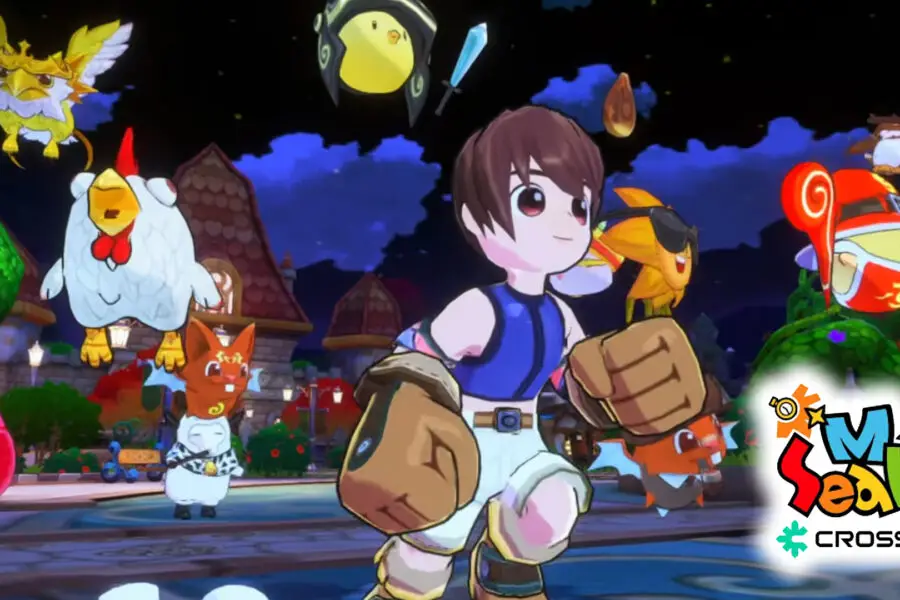
With 2.2M pre-registrations, Seal M on CROSS blends classic MMORPG gameplay with blockchain rewards through a gameplay-first model.

Malwarebytes warns of a phishing site mimicking Pudgy World that steals crypto wallet passwords. Learn how the scam works and how to stay safe.
Claim your share of the 3rd Binance Alpha Box Airdrop — earn 470 INFINIT or 5,000 BLUAI tokens with 240 Alpha Points. Here's how to participate.

Gotchi Guardians is a “tower defense brawler” that reimagines the genre as a frantic, cross-platform PvP arena. Instead of quietly placing towers and waiting for...

Legends of Elysium is a hybrid TCG/board battler that pushes past the typical “lane duel” template by dropping your cards onto a hex-based battlefield. Every...

Foxaria is a web3-native action platformer built around “Shadows,” on-chain avatars that embody different NFT communities and meme cultures. You begin by minting (or playing...

New Festival Town is pitched as a retro-inspired social arcade and life sim hybrid built by Ashara Studios. On mobile (per the Google Play listing)...