

Pixels
Pixels is described as an MMORPG Pixel NFT game that allows players to engage in farming and community-building activities in a pixelated world. It promotes...
Wash trading is the practice of artificially inflating a token’s trading volume by repeatedly buying and selling with yourself or coordinated accounts. Our detector analyzes price and volume patterns to identify suspicious activity using four independent heuristics, combined into a composite risk score from 0 (clean) to 100 (highly suspicious).
Compares 24-hour trading volume against market capitalization. Legitimate tokens typically have a volume / mcap ratio below 15%. Ratios above 100% are highly suspicious, and above 300% almost certainly indicate artificial volume.
Tokens with market cap below $100k are excluded — ratios are naturally noisy at low caps.
Detects hours where high trading volume occurs with minimal price movement. In legitimate markets, high volume causes price discovery. When volume surges but the price barely moves, it suggests the same entity is trading with itself.
Analyzes 7 days of hourly data. For each hour in the top 25% by volume, the detector checks whether the price range was “flat” — defined as below 30% of the token’s own median hourly movement. This adaptive threshold avoids false positives on large-cap tokens with naturally tight spreads.
Requires at least 12 hours of data. The flat threshold is bounded between 0.05% and 0.5%.
Flags sudden volume spikes relative to the token’s 30-day average. A spike ratio above 3× is suspicious, especially if the price didn’t move. If the price actually moved more than 2%, the score is halved — the spike is more likely driven by real market activity.
Compares the token’s volume / mcap ratio against other tokens in the same categories. If a token’s ratio is significantly higher than its peers, it may be artificially inflating volume. Tokens more than 3× the peer median are flagged.
Requires at least 3 peers in the same category. Tokens without category metadata are excluded.
The final risk score is a weighted average of all available sub-scores. Sub-scores that lack sufficient data are excluded and their weight is redistributed. A confidence level (low / medium / high) indicates how many sub-scores contributed to the composite.
Tokens launched less than 30 days ago have their scores reduced by 30% to account for naturally volatile early trading patterns.

Mining-Voxels is a large play-to-earn game that simulates the real-world economy in Wax Blockchain. Mining-Voxels provides you with an enjoyable environment by presenting a real economy model. Due to its real economy model, it involves long-term gameplay.
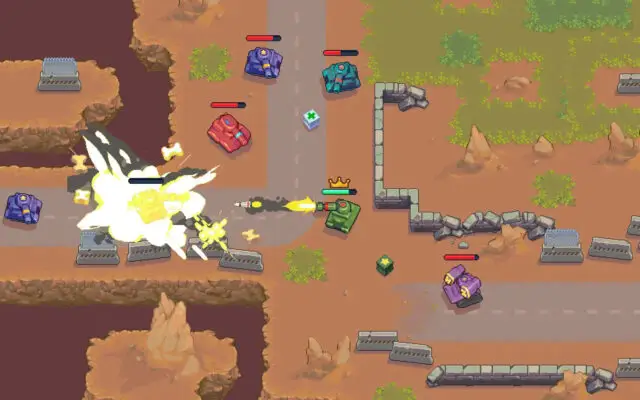
Panzerdogs is a SUI NFT gaming project where users can own each in-game asset and use them to battle against each other in tanks! Think Brawl Stars, but with tanks and play to earn mechanics. Gameplay is skill based, with players landing and dodging shots against each other, thinking strategically in real-time, outwitting your opponents, and using the sandbox. Anyone can start playing Panzerdogs, even if they do not own Tanks Parts or Dog Avatars. However, in order to fully participate in most of the Play-and-Earn mechanics owning both Tank Parts and Dog Avatars is required. Tank Parts are used to […]
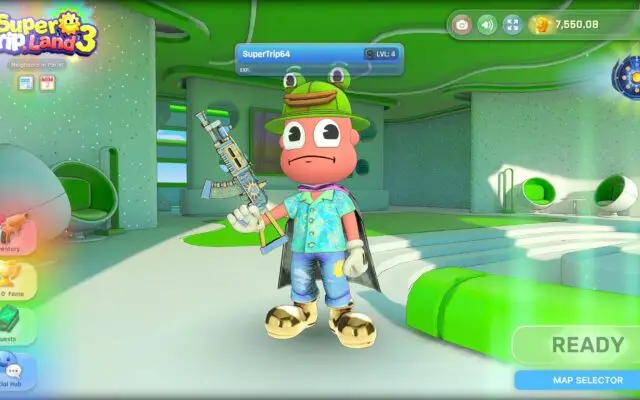
SuperTripLand is a multiplayer FPS shooter in your web browser. Engage in psychedelic free-for-all deathmatches, outgun your rivals, and rush to secure the first place victory Five Unique Guns: Each weapon offers a distinctive playstyle. Master them all and dominate the battlefield. Dynamic Maps: Three worlds with mind-bending visuals await your exploration. Character Customization: Stand out in the crowd. Deck out your character with endless customization options. Party Up: Team up with friends, send private messages, edit your profile, and take on opponents together. Unlockable Skins & Cosmetics: Show off your flair. Unlock unique skins and accessories to flaunt your style. […]
The first AI Agent-driven chapter of Palio’s Emotional Layer, a Stanford-town-style sandbox In this cozy yet dynamic simulation game, each shop, NPC, and customer is powered by AI Agents with memories, moods, and autonomous decision-making. Build your own shop, craft unique goods, trade with AI-driven characters and real players, and experience a world that evolves emotionally with every interaction. Craft & Trade blends simulation, social gaming, and AI experimentation in one seamless loop. Backed by blockchain, every achievement, relationship, and asset you create truly belongs to you, forming the foundation for Palio’s vision of an emotion-powered gaming universe.