

Pixels
Make your home in a sprawling pixel-art world: farm crops, raise animals, gather resources, and level up skills alongside thousands of other players. Pixels runs...
Wash trading is fake trading. Someone buys and sells the same token with themselves, or with a ring of wallets they control, so the volume number looks big. No real ownership changes, but the chart shows heavy activity. That fake volume can make a token look more popular and more liquid than it is, which can push you to overpay or buy into something you later struggle to sell.
Our detector watches each token’s price and volume for the patterns wash trading leaves behind. It rates what it finds from 0 (clean) to 100 and turns that into a plain label. This is our own automated read of the evidence. It is not financial advice, and it does not say a token is safe or unsafe to buy.
Each label sums up how much suspicious trading we found.
A Minimal reading does not mean a token is safe to buy. It means our checks did not flag its trading. Other risks sit well outside what this tool looks at.
We run four independent checks. Each looks for a different fingerprint of fake volume, and a token can trip one without tripping the others.
We compare how much of a token trades in a day against how much the whole token is worth. A healthy token turns over a small slice of its value each day. When a day’s volume runs near or above the token’s entire market value, real buyers rarely explain it. Above triple the market value, the volume is almost certainly manufactured.
We skip tokens worth under $100k, where these ratios swing wildly for honest reasons.
Real buying and selling pushes a price around. We look for hours where volume jumps but the price barely shifts. Huge volume that moves the price almost nowhere is a classic sign that one party is trading with itself. We measure “barely shifts” against each token’s own normal swing, so steady large-cap tokens do not get punished for trading calmly.
We compare today’s volume against the token’s average over the past month. A burst several times the usual level, with no matching price move, looks staged. When the price moves with the volume, we ease off, since real news brings real spikes.
We line a token up against others in the same category. If its volume runs far hotter than similar tokens with nothing to explain it, that stands out. We need at least three peers before we draw the comparison.
We blend the four checks into one score, leaning on the checks that have enough data behind them and ignoring the ones that do not. Tokens younger than 30 days get a gentler score, because new tokens trade in choppy ways for honest reasons. Alongside the score we show a confidence note of low, medium, or high, which tells you how much data we had to work with.
We rerun every token’s analysis once a day. The 30-day chart on each token page shows how its score has moved over time. That helps you tell a one-off blip from a token that stays flagged week after week.
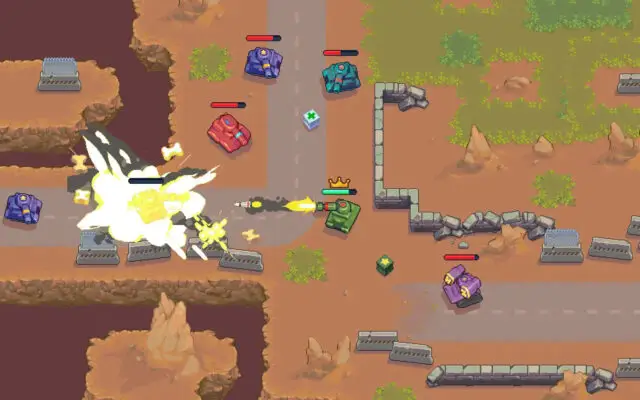
Drop into real-time top-down tank combat where aiming, dodging, and outmaneuvering your opponents wins the match. Think Brawl Stars, but you pilot a tank. Anyone...

Spawn into a psychedelic free-for-all and frag your way across three themed worlds. SuperTripLand is a free browser FPS on Base with five weapons, character...
Open your own shop in a 2D sandbox where the AI-driven NPCs remember you and shift their moods based on how you treat them. Craft...

Grow your crops, mine Pow, fight bosses, and trade through the in-game shop in a live market other players move with you. Five classes feed...