











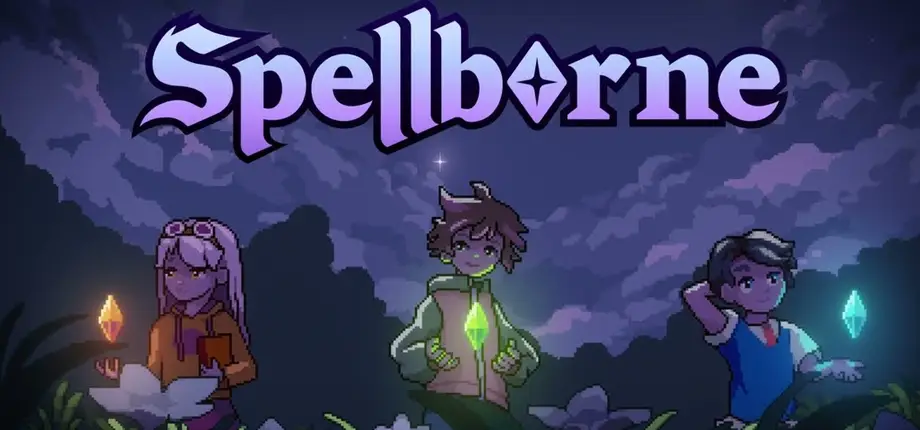
Spellborne
Pick one of three hunters, then catch monsters, grow crops and make friends across a pixel-art MMO world. Spellborne plays in the browser and on...
Pick one of three hunters, then catch monsters, grow crops and make friends across a pixel-art MMO world. Spellborne plays in the browser and on...
We break down 2,785 crypto gaming stories from September 2026. Axie Classic goes to its community, FrenPet jumps 307%, Audiera sinks and funding stays at zero.
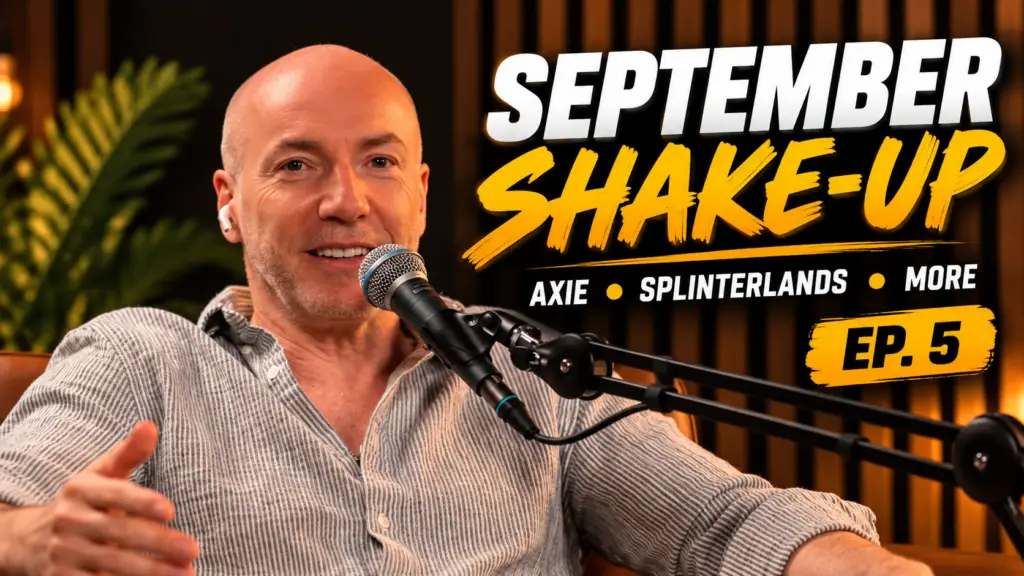
On this episode of the JRPG Crypto Games Podcast, we go through our September 2026 industry report with Nikolay and July from the JRPG team. We tracked 2,785 crypto gaming stories last month, 23% more than in August. Axie Infinity handed Axie Classic over to its players, the Splinterlands DAO started buying back its own token, and for the third month in a row nobody raised a single dollar.
We also dig into the two studios that did raise money back in June and what they have done with it since, the 307% run of FrenPet, a token whose game we could not even load, and the slow collapse of Audiera, the AI music game that was briefly worth billions.
This transcript has been lightly edited for readability. Speakers are Colorado, Nikolay and July from the JRPG team.
Colorado: Okay, everybody, welcome to the JRPG Crypto Games Podcast. Every month we publish an industry report in the Industry Report section of our website, and today I want to talk about the September report.
We’ll talk about the news first. We looked at 2,785 stories about crypto gaming, and this month that was up 23% from the previous month. But the previous month was August, and maybe some people were on vacation, so I’m not sure how much of a signal is coming out of that. Still, people are talking more. Of the 2,785 stories we looked at, two stood out as the top stories.
Colorado: The first one is Axie Infinity. Axie Infinity is basically taking Axie Classic… Axie Classic was the game that really defined crypto games. It became the most valuable one and the one everybody was trying to copy. It drove the funding craze, back when they had this one game with a market cap of $20 billion and everybody wanted to be like Axie. This was the one that really triggered everything.
Axie Classic being turned over to the community is really the signal that the old model, the ponzinomics, just doesn’t work. You know, pay to win, buy this NFT expecting someone else is going to buy it at a higher price. That’s Axie’s admission. They don’t even want to try to revive this thing. They’re just turning it over to the community.
Nikolay has actually joined the call. Nikolay is from our team, and he’s here with us remotely. Say hi, Nikolay.
Nikolay: Hello.
Colorado: Nikolay played Axie Classic back in the heyday, when it was something really big, and he owned an Axie. Nikolay, why don’t you tell us about Axie Classic and what this move means? Give us some more background.
Nikolay: When Axie launched in 2018, it was a 3v3 turn-based card battler. The different elements were NFTs, and you could put them on your Axies to give them different stats and all that. As Colorado mentioned, I owned an Axie, which I can’t find anymore because I forgot my account. It wasn’t worth a lot back then, so it’s probably not worth a lot now.
So the game launched in 2018, and 2021 is when the big play-to-earn boom happened. That was driven largely by Axie’s scholarship guilds, which was a program they ran. In 2022 the current version of Axie, Origins, released and became the main game. Axie Classic lost its SLP rewards and was sort of sidelined. Then in 2023, after popular demand from the players, Axie Classic returned. They had a tournament, and it was a big deal at the time. They’ve been running it until today, and now they’re going to turn Axie Classic over to what’s called the CORC, the Classic Origins Resurrection Committee. The committee will take it and basically govern Axie Classic.
Colorado: Wow. It’s interesting that there’s still a community of people who actually like to play the game even when the promise of high earnings is gone.
Colorado: All right, the other big story was Splinterlands. Splinterlands did something really interesting in September. Back in July, the DAO got together and proposed that they start buying back some of the tokens that are out there and putting them in the treasury. That might mean they sell them in the future too. They could buy and sell. But this is along the lines of what a big public company like Microsoft or McDonald’s would do to prop up its stock when it thinks the price is too low.
So the DAO authorized a buyback. A DAO is a decentralized autonomous organization, so basically anyone who holds these tokens can vote, and the decision was to go ahead and start buying back tokens. They bought back $18,000 worth, which is not really a lot. But the token moved up for the whole month of September. It was up thirty-some percent for the month, versus 13% for the index as a whole.
Now, if a 30% move was driven by $18,000, at about $500 a day, then the token is really thin. And when I look at the volume, it’s substantially more than that. So did the buyback do it, or was it something else? I don’t know. But I found it a really interesting story. Splinterlands is also one of the most searched-for games when we look at how much users are looking for something.
So July, what do you know about Splinterlands? What can you tell us?
July: Splinterlands is a card game, and the cards are NFTs. Everyone can play for free, although the competitive scene does kind of demand that you use cards you either buy from other people as NFTs or rent, which is kind of cool. So you can play casually for free, and it’s pretty chill, but for the competitive scene you have to start investing some money, potentially to win some money back.
The game is fairly simple. You pick a summoner, you pick the cards you want to use, and then you challenge someone to a battle. Each battle has a random effect for the round, something that throws a twist into the whole thing, so you can’t just build an overpowered deck that would always win mathematically. There’s an element of randomness to it. Then it plays out on its own. You don’t really control the cards. You just let it play out.
They’ve been active for a long while. They launched way back under a different name, then changed it to Splinterlands in, I think, 2020. They keep posting updates and new cards. I think they launched new cards in June, and at the end of September they dropped some sort of special card that has a separate effect on the battle. I haven’t tried it.
Colorado: I’ve never really gotten into card games. Is this auto-battling normal? Is it like Hearthstone or MTG? Do the other games auto-battle, or are you making the decisions?
July: Yeah, making the decisions is the heart of most card games. This is a different twist on it. You construct the deck, and then it plays out based on your plan for the deck. It obviously interacts with other decks, which can throw your plan out of whack. So it’s a different take. In Magic and Hearthstone you do all the playing. The game doesn’t play for you.
Colorado: I know this one’s been out there for a while. So is this pay to win? Is this the old strategy, the ponzinomics? What does buying these NFTs get you?
July: Well, for the competitive scene, if you’re doing tournaments, you’re probably going to need cards that you either buy as NFTs or rent from other people. If you’re just playing casually, you don’t need them, so you don’t need to invest any money if you don’t want to. But if you want to try to win some money back, you’re probably going to have to put some money in.
I don’t know if it’s exactly pay to win, because a lot of physical card games work that way too, like Magic: The Gathering, which I play. Magic has entire formats that are very, very competitive, and most of the serious tournaments happen around those. Some of those formats allow old and rare cards, and those decks get really expensive. Some people think those formats are pay to win because you need a lot of money to build a legit deck, and tournaments don’t allow proxy cards. Even in Hearthstone, which is all digital, you can win points and use them to buy packs, but it’s still random. You can craft cards, but you’re limited. If you want to be competitive, you end up buying a bunch of stuff.
Colorado: Got it. So you’re saying pay to win has nothing to do with the NFT or crypto space. It’s inherent in all the different card games out there.
Colorado: All right, let’s talk about the September numbers for financings. Nobody got any money again. In 2024 there was a billion dollars in funding. The peak might have been something like $8 billion back in 2021 or 2022, but 2024 was about a billion, and it was down from the year before. Last year was $300 million. This year there were a couple of big ones early on, and the year’s not over yet, but I think we’re looking at maybe $60 or $70 million so far. I don’t know what we’ll see in the last three months of the year, but no one has funded anything since June.
There were two fundings in June. One was for $3 million and the other was for $2.1 million. We’ll get into those in a second.
There was a little bit of money going through the ecosystem. We had $95,000 in tournaments and airdrops, and the tournaments just keep getting smaller and smaller. We’ve been doing stories on some of these. Legend of YMIR, which is put together by Wemade, a huge company, runs tournaments where the grand prize is like $100. I think we even saw a tournament with a grand prize of $25. In total we had $95,000 in tournaments, down from $243,000 in August. And August is supposed to be the slow summer month. August was also a little up from July, which was $147,000. So this was the lowest month we’ve seen in quite a while.
Colorado: To go back to those two fundings, the two companies that got funded in June were Arena of Faith and Final Taptasy. Nikolay, what can you tell us about Arena of Faith?
Nikolay: Arena of Faith is a 5v5 MOBA with a PC and a mobile version. It’s the classic MOBA experience: three lanes, towers, gold, destroy the enemy crystal, all that stuff. Its setting is gods versus humanity, sort of a twilight-of-the-gods thing, and it pulls gods from every mythology. It’s on PC, Android and iOS. Something interesting about it is that it has no region-locked servers. It’s one global server, and all the regions play together.
Colorado: Yeah, okay.
Nikolay: Another interesting thing I found is the PoFS system they use. It’s proof of frame sync. Here’s how it works. Every player’s inputs are recorded, and a validator node replays the match and reconstructs the result. That’s how a match result gets validated.
Colorado: Wow. Now this kind of makes sense if you’ve got one global server. You’ve got one guy dialing in from Nigeria playing against a girl in Iceland, and there’s going to be some latency going on.
Nikolay: The game is definitely focused on esports, and they’re very open to individuals, teams and local clubs hosting or taking part in tournaments. So it makes sense that they built this proof of frame sync system. It’s not exactly new. StarCraft has used it in the past. What’s interesting is that anyone can rent a validator node, be part of this validation network, and share part of the profits when they validate a match or help with a tournament.
Colorado: When we covered the announcement back in June, this funding was supposedly going to some AI initiative. What do you know about that?
Nikolay: Well, the only news we have about the funding is their own announcement. As for where the money went and what happened to it, we still don’t know. The game seemingly hasn’t been doing so well lately on Steam. Reviews have been mostly negative, and concurrent players have been at zero for a while. There is speculation that this money could go toward some sort of relaunch, but we have no idea yet. They haven’t said what they’re going to do with it.
Colorado: All right, thank you. Let’s talk about the other one that got money, Final Taptasy. July, what can you tell us about it?
July: Final Taptasy launched in 2016, and a bit later it rebranded into a whole Web3 crypto game. They recently raised $2.1 million, was that right?
Colorado: Yeah.
July: I don’t know what they were supposed to use it for. They haven’t said what the people who backed them want in return or what they’re getting, so we don’t know that either. As for their roadmap, they promised a bunch of things. For Q3 and Q4 of 2025, they promised an NFT marketplace…
Colorado: 2025 or 2026?
July: 2025, all the way back. They promised an NFT marketplace, and I’ve yet to find anything like that for the game.
Colorado: I’m holding my breath.
July: For Q1 to Q2 2026 they promised DAO governance, where again the token holders have the voting power. I haven’t heard any news about that either. In fact, they went silent on X after August 24th and haven’t posted anything since. They’re all anonymous. There’s no studio name and no developer names behind it, so it’s hard to even look for accountability.
So it’s looking a bit sketchy. They’re supposed to be on iOS and Android, but I couldn’t find the current game on either store. I could only find the iOS listing for the old 2016 game. On their website they have an APK for the new one. I didn’t download it, because I’m skeptical of APKs from a company I don’t completely trust, and they’re anonymous, so I have no reason to trust them right now. It’s all looking a bit sketchy to me.
Colorado: Transparency is just… So, Final Taptasy, $2.1 million. I would say these guys get an F for communication with the public. If you’re out there raising money, transparency is the one thing that builds trust. Even if your news is bad, you should be saying whatever it is. Just update the community. I guess Final Taptasy was a good game in 2016, and now we can’t find it and can’t play it. There’s some APK we don’t trust and no other communication.
Colorado: Okay, let’s talk about the movers. The movers always get me excited. The biggest mover for the month was FrenPet. FrenPet was up 307%, and it finished over $10. It was $10.32 when I checked it today. That 300% sounds like a pretty interesting move, but if you go back to July, this was the lottery-ticket token. In July it was trading at seven cents, and now it’s over 10 bucks. If you’d put $1,000 in back in July and HODLed, just held it and didn’t get scared as it rode up and down, it would be worth $150,000 today. Those are some seriously impressive numbers.
We’ve got a wash-trading detection algorithm. It’s not perfect, but it does point out some obvious things. Wash trading is when I sell a token to July and July sells it back to me. Maybe we get five or ten people in on it together, and we all keep passing the tokens back and forth like a hot potato. We say, okay, today we sell them to each other for around five cents, and tomorrow for 10 cents. You can create the illusion that the token is going up and people are trading it, when in fact it’s just a tight circle of people. We track for this, and we couldn’t find it. That doesn’t mean it wasn’t there, but we didn’t find it.
The other thing we look at is how tightly held a token is. In a perfect scenario, insiders hold 10 or 20% of the token and 80% is out in the market, in the hands of the public at large. When you’ve got a situation like that, you can say the price reflects what the market really feels about it. This one is almost all tightly held. It gets our highest risk rating for the chance that what’s actually trading doesn’t represent the whole thing.
So July, you went to their website today. What happened?
July: I tried to play it. I went to the website and there was a whole login through Google. Very simple, very smooth process. I didn’t have to create a special account, I just chose Google. You can also choose Apple, you have the options. It was smooth until it started creating a wallet. Then it loaded and loaded, 10 minutes passed, and I lost interest and closed it. It just got stuck there, and I couldn’t even launch the game. Supposedly this is a game with a bunch of money behind it, and I couldn’t even play it.
From what I saw, the game looks kind of cute. It’s not some big blockbuster. It’s a Game Boy-style, dark green and gray, Pokémon type of game. You adopt a little pet, like a Tamagotchi. You feed it, train it, and challenge other people and fight their little Fren Pets. You win or lose and money changes hands, and that way you can win some rewards. I couldn’t get to try any of it, though. Supposedly you get a few free transactions each month, I think 10. I couldn’t try that either.
Colorado: Wow. So after the move, FrenPet’s token has something like a $73 million market valuation, which puts it right up there with the big boys as one of the biggest tokens in the industry, based on this game. I definitely give them applause for trying social login. I think that’s fantastic, because it cuts the friction of connecting a wallet and setting up a wallet. Anyone can just log in with Google, and they set up the wallet for you. But their social login doesn’t even work, and the game is unplayable. That’s a huge red flag in my book, especially for one of the leading tokens, where we’d expect this to be worked out. So, red flag on FrenPet. But wow, what a move.
Colorado: Let’s talk about the losers. The biggest loser is Audiera, and this one doesn’t surprise me at all. In the summer, Audiera’s valuation got into the billions. It wasn’t just the top gaming token. It was in the top 100 on CoinMarketCap. I think it was on the first page, maybe even in the top 50. The valuation was just in the stratosphere. It was the only gaming token with anywhere near that kind of valuation, and I wanted to know what was driving it. Had someone figured something out? And sure enough, this is not just a game. This is AI, it’s AI agents. And I’m like, wow, have they figured out some cool models?
So I went to their website to try the game, and the website basically said no. The only way to access it was through your mobile phone. That immediately put me off. If you’re worth billions, if you’ve got a software product out there that’s worth billions, you’d probably want to make it available on every platform. When July and I were running a game studio and putting games out, we’d try to get on every single platform, and we were not worth billions. So why aren’t these guys covering that?
Anyway, I went to my phone and logged in. They had second-rate audio generation software. There are a bunch of free, open-source models that do roughly what Suno does, maybe not quite as well, but you can make music with them, and they were using one of these. They had a bunch of AI art that obviously looked like AI art. I looked at the Similarweb statistics for the website. No traffic. Nobody was going there. Everything was paywalled, and nothing showed this was a product driving millions of users. I couldn’t figure it out.
The token ended up crashing horrifically, and it keeps crashing. It’s way out of the top 100 now. The market cap has completely fallen, and it keeps nosediving. It was down 33% for the month. Nikolay, you tried to play the game today. What happened?
Nikolay: It’s interesting that you mention you could use it on your phone. When I tried to access the site, I got a 403 Forbidden message, just a plain blank white page. But I did a little investigating. I’ll try to keep it as non-technical as I can. The request gets forbidden by a load balancer, not by the server itself, so the server is accessible. It turns out it blocks requests only on Windows and Linux, in browsers like Chrome or Firefox. If you access it from your phone, or from Chrome or Safari on macOS, it works, and I think it’s the same site you saw before. Very weird, and definitely not professional.
Colorado: So they’re not even explaining the error. When I went there, they explained it. They said you have to access it on a phone. Now they’re just returning a 403. Wow.
Nikolay: No error message anymore. Just a blank page with a 403.
Colorado: Okay. All right, I think that’s everything we’ve got for the September report. Thank you, everybody, for tuning in. Until next time.
All: Until next time!
◆ ◆ ◆
 Outlaw Troopers x Alien Worlds Drone Racing Ends
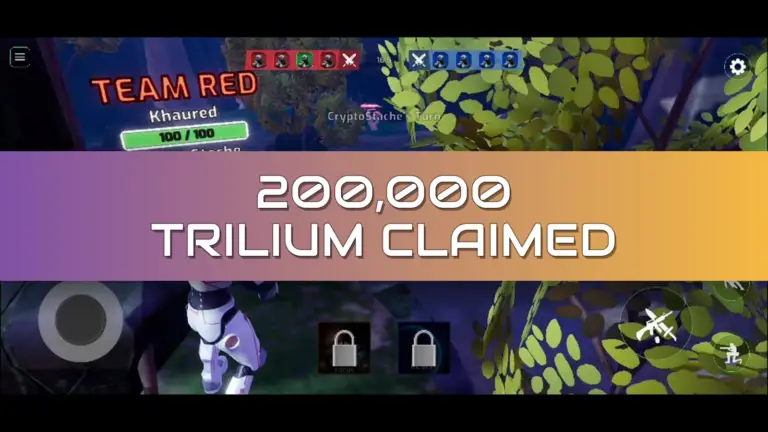
Alien Worlds drone racing finale: 200,000 Trilium claimed across 21,485 matches.
July 17, 2026
Outlaw Troopers x Alien Worlds Drone Racing Ends
Alien Worlds drone racing finale: 200,000 Trilium claimed across 21,485 matches.
July 17, 2026
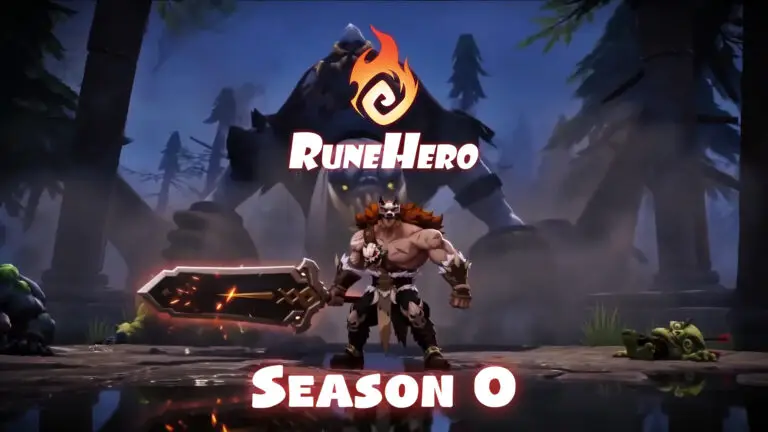 RuneHero Season 0 Unleashes Crystal NFTs and USDT Rewards
It’s official: RuneHero's Season 0 has kicked off, bringing along seven rewarding paths for players eager to earn while they play.
April 7, 2026
RuneHero Season 0 Unleashes Crystal NFTs and USDT Rewards
It’s official: RuneHero's Season 0 has kicked off, bringing along seven rewarding paths for players eager to earn while they play.
April 7, 2026
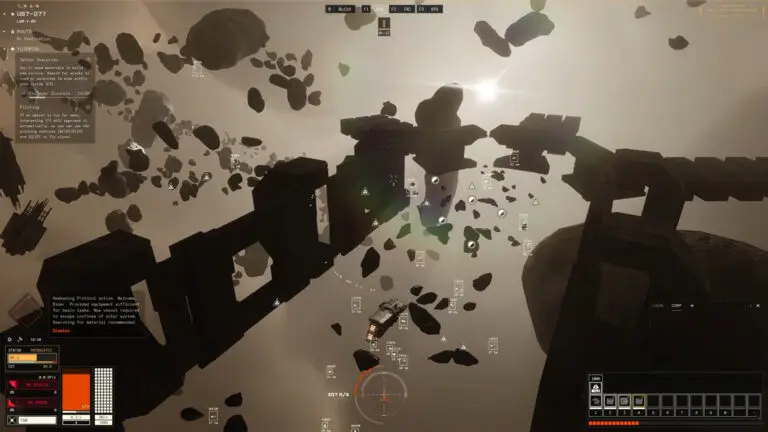 CCP Games Unveils Cycle 5: ‘Shroud of Fear’ Update for EVE Frontier
EVE Frontier's Cycle 5 'Shroud of Fear' is the game's biggest update yet, adding clone production, Orbital Zones, and a migration from Ethereum to…
March 16, 2026
CCP Games Unveils Cycle 5: ‘Shroud of Fear’ Update for EVE Frontier
EVE Frontier's Cycle 5 'Shroud of Fear' is the game's biggest update yet, adding clone production, Orbital Zones, and a migration from Ethereum to…
March 16, 2026
Lock in a squad of mushroom champions and battle through turn-based PvE and PvP across Arborethia, joining guilds and running quests for loot. Champz plays in your browser and on Android, where the 9,000 collectible Champz you fight, forage, and craft with are NFTs you own and trade on the marketplace. Hold the $CHAMPZ token on Base to earn Truffles you can swap for ETH. Free to play.
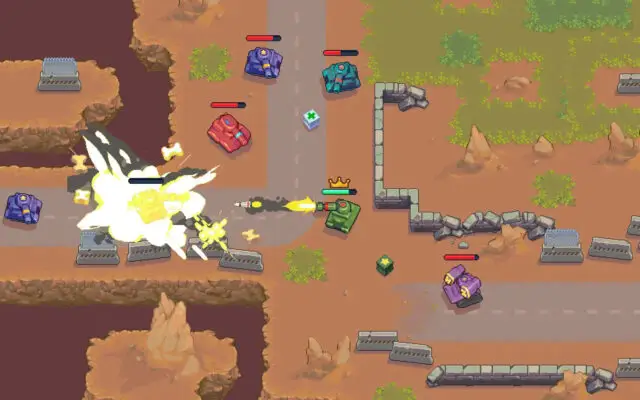
Drop into real-time top-down tank combat where aiming, dodging, and outmaneuvering your opponents wins the match. Think Brawl Stars, but you pilot a tank. Anyone jumps in free, while owning Tank Parts and Dog Avatar NFTs unlocks the full play-and-earn rewards on Sui. Play in the browser on PC or mobile, or grab a build from the Epic Games Store and Google Play.
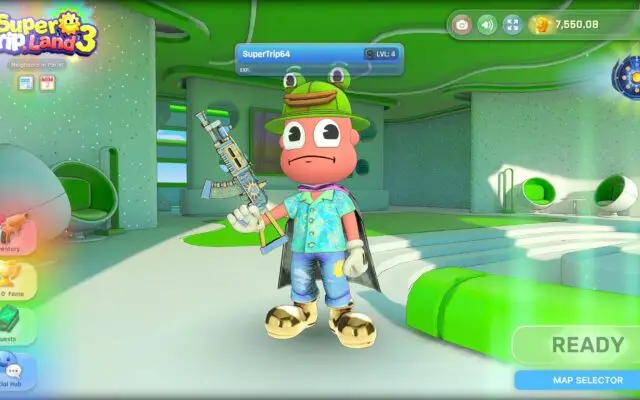
Spawn into a psychedelic free-for-all and frag your way across three themed worlds. SuperTripLand is a free browser FPS on Base with five weapons, character customization, unlockable skins, and party play when you want to squad up with friends. The Web3 layer stays optional: TripCoins live as Base tokens tied to your wallet, there if you want them.
Open your own shop in a 2D sandbox where the AI-driven NPCs remember you and shift their moods based on how you treat them. Craft goods from blueprints you unlock, run dungeon quests for rare materials, and trade with both the AI cast and other players in an economy that reacts to your moves. Everyday play earns in-game GOLD, anything you create gets recorded on-chain, and the whole thing plugs into the $PAL ecosystem on BNB Chain right in your browser.