







Spellborne
Pick one of three hunters, then catch monsters, grow crops and make friends across a pixel-art MMO world. Spellborne plays in the browser and on...
Pick one of three hunters, then catch monsters, grow crops and make friends across a pixel-art MMO world. Spellborne plays in the browser and on...
Colorado and July talk to Adam, game director of the Sui RPG Pawtato Land, about funding staking rewards from game revenue, holding content back from the game's most dedicated players, and a crafting economy where bosses drop only materials.
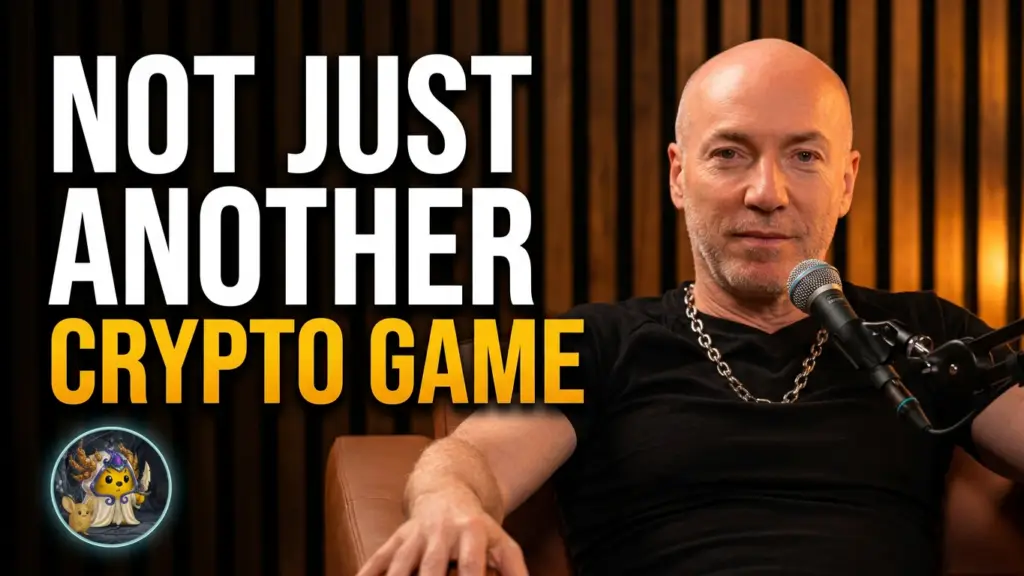
On this episode of the JRPG Crypto Games Podcast, Colorado and July sit down with Adam, game director of Pawtato Land, a crypto RPG on Sui where you play as a little dog/potato hero. Adam explains why the game has paid out only one airdrop, worth 5% of the $TATO supply, how its staking rewards come from real game revenue instead of newly minted tokens, and why the team holds back finished content so its most dedicated players don’t run out of things to do.
We also get into world bosses that pulled 200 players onto one map and overheated some phones, a legendary fish with a 0.07% catch rate that sells for about $30, where the game’s players actually live, and what a crypto game that launched in 2025 learned from the billions earlier projects burned through. Before all that, we have an exclusive first look at Genesis Pets, Pawtato Land’s next NFT collection.
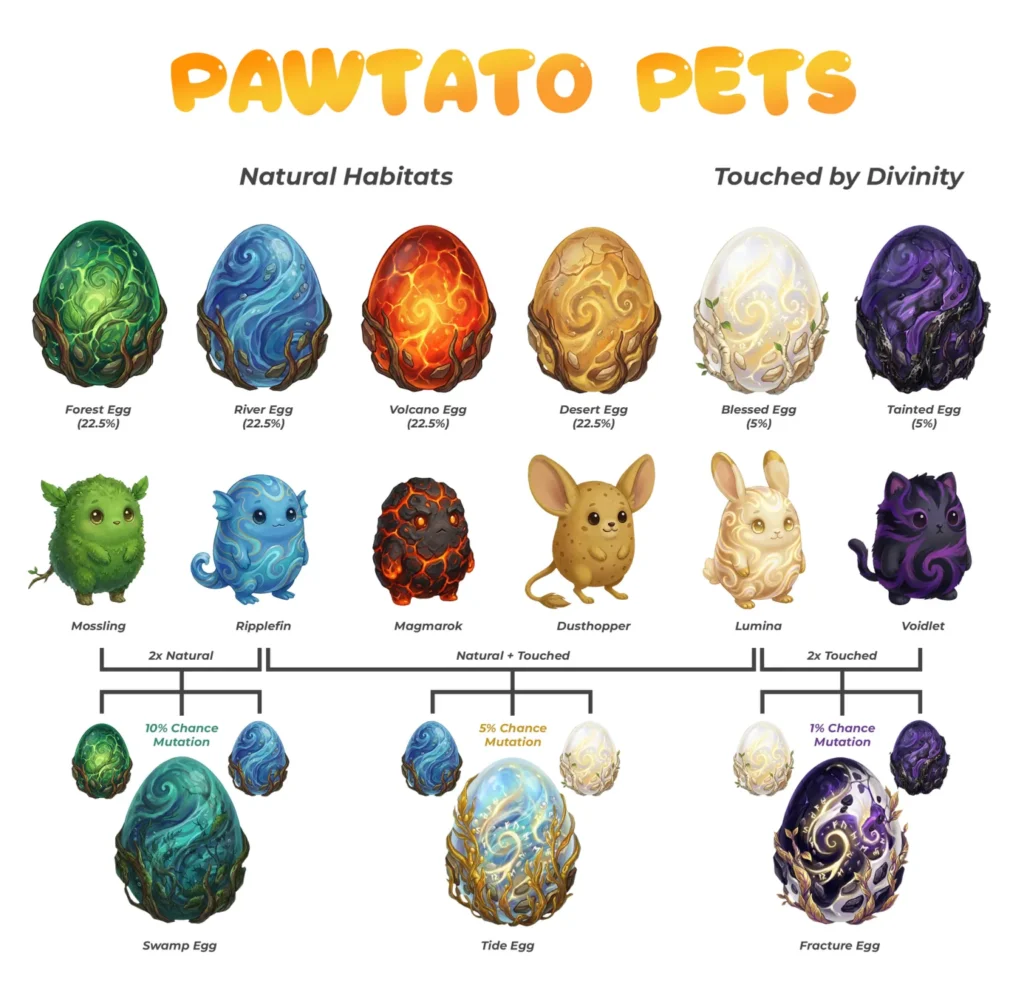
Pawtato Land shared the first details of Genesis Pets with us. They will be the game’s third NFT collection, after 15,000 Lands and 30,000 Genesis Heroes, and both of those minted out in minutes. There is no mint date yet. The team is waiting for a better crypto market.
This transcript has been lightly edited for readability. Speakers are Colorado and July from the JRPG team, with Adam, game director of Pawtato Land.
Colorado: All right, welcome to the JRPG podcast. Today we have a very special guest. July and I were playing this game the other day, Pawtato Land. It’s a crypto game, and it’s awesome. We had a lot of fun playing it. Today we’re joined by Adam, who is the game director behind Pawtato Land. So, Adam, welcome to the show. Maybe you could start off by telling us a little tiny bit about your background and your role at Pawtato Land.
Adam: Absolutely. Thanks for having me. Great to be on the show. My background is a bit of a mix of technical work, marketing and business development. I’ve tried a lot of things in my professional life. But I’ve been a gamer since, I think, I was six years old, mostly into RPGs, which is also what Pawtato Land is. About a year ago, the two founders of Pawtato Land onboarded me and gave me the chance to follow my passion and bring my input into developing the game.
Colorado: Nice. What was your favorite RPG?
Adam: That’s a good one. I think the all-time favorite is still World of Warcraft. That’s the one that took the most hours of my life.
Colorado: Fantastic game. Can you tell us a little bit about the story behind Pawtato Land?
Adam: I can tell you a little bit about the lore of Pawtato Land, and then a little bit about how it came together. The lore is quite interesting. It was already there when I joined, but I’m now also responsible for developing it. It’s about the Pawtatoes, a race that, as the name says, is a mix of a dog and a potato.
They live on a continent called Axoma, which the goddess Axomama protects for her earthborn children, in a world that’s subject to decay. The rest of the universe has been taken over by an evil god called Supei, and Axoma was sort of the last bastion, with a golden barrier around it. But the goddess grew weaker, and at some point Supei managed to put a crack in the barrier. The evil energies seeped in and made a huge crack in the continent, called the Great Divide.
It separated the Pawtatoes into three tribes, now divided by the big desert: the Sproutpaws, the Amberclaws and the Flowtails. They all have the mission to wake the goddess again, since she fell into a deep slumber when the barrier crashed. That’s where we are right now. More of the lore gets revealed as people play the game, so for those who are interested, there are a lot of lore hints hidden in the game.
July: That sounds like a lot of lore for such a charming-looking little game. It goes deep, with gods and stuff.
Adam: We have a cool, short trailer. It’s just two and a half minutes, and it sums it up. It’s a cinematic trailer of the game, so have a look at it. I think it’s quite cool and epic.
Colorado: Really? Okay. Yeah, we’ll put a link to it in the article when it goes up.
July: Definitely.
July: All right, let’s talk a little bit about the process and the challenges behind building the game while people are still playing it. You have people experiencing all of this, and you’re building on top of it and adding more. And obviously, in a game that’s tied to crypto, balance is important, both for the tokens and for the content you release, so that it’s challenging and interesting for everyone.
Adam: Yeah, absolutely. I think this is one of the most interesting parts of developing a blockchain-based game. You start out with a token sale or an NFT mint or something to finance development. In traditional games, you have big financing, and the studio builds a game for five to seven years and releases it when it’s finished. But in Web3 you’re selling a token or an NFT, and people expect some kind of utility.
So you start building the game and releasing it at the same time. We started with the land NFTs, the Pawtato Land NFTs, where you had the chance to mint land plots. The very first gameplay was staking those NFTs to generate resources. Different lands could generate different resources. Then we built the game around it. That was about one and a half years ago. I think it was in summer 2025.
The heroes came a little later, in winter, and heroes are really the NFT collection for the average player. You can start playing the game now without paying for an NFT. You just create a starter hero. You have limited access with it, but you can upgrade it to an NFT hero anytime, and then an NFT hero gets burned in the back end. But those are technicalities.
We had to start with a very limited area, introducing the different mechanics of the game, like combat, crafting and gathering. So we’ve been building this skeleton of features and game mechanics in the back end while giving people the chance to play them.
One of the last things we released was travel. Before that, you couldn’t really move your hero around the world. You were acting as an invisible hand over the world, using all the different features. Now you have to travel with your heroes. So we release those features step by step, along with content that lets players explore more and more of the world: harder content, new encounters, new items and new crafting recipes, all while we build the game mechanics in the back end.
I’d say we’re now about 90% done with the skeleton of the game, and now it’s more about building feature after feature and more and more content. And here’s the difficult part you mentioned, July. We have these early adopters, the OGs of our game, who bought the land NFTs and have been with us for one and a half years. Of course we don’t want them to get bored, so we keep putting up more content for them to progress in.
On the other hand, we want to onboard new players. So we also have to build the onboarding experience for new players, which we neglected a little and are now catching up on. We want to make it easy for them to get into the game, learn things and progress without getting bored, while also tending to the end game for our existing users. Balancing those two priorities, or doing both at the same time, is a big challenge. At some point this gap will hopefully close, and we’ll have a seamless game loop from the very first step to the end game.
July: Balancing any game, period, is difficult already, but one that’s on the chain and multiplayer makes it so much more difficult. And it’s funny you say that until recently you couldn’t move around on the map. You couldn’t walk. I had so much fun with that. It’s so charming to see your little potato guy hop around everywhere. You’re on the completely opposite side of the map, you click on the other edge, and you watch him wobble and hop all the way to the other end. It’s very charming.
Very well done. And the onboarding was very good for me. I feel like I started the game without any issues. There were a bunch of quests at the start. Yes, there’s a bunch of information and a bunch of menus, but I think anyone who’s used to playing games will have a pretty smooth experience. So good job on that.
Colorado: Yeah, I second July on that. That hopping experience, watching it bounce around the map. And then when you see other people playing, and you see their little avatars, their little puppies, bouncing around, it was just delightful.
Adam: Awesome, great to hear it.
Colorado: Why crypto at all? You built a really rich game, and a lot of games don’t need crypto to succeed. By bringing in crypto, you invite all these headaches: complication, security audits, protection against bots and resistance from certain players. Why did you choose to do crypto at all?
Adam: I think mostly because we’ve been in crypto for such a long time, and the community is a big part of it. But why crypto for a game? There are two main reasons. The first is ownership of your assets, which you just don’t have in traditional games. They can shut down the game and everything is gone. You can get banned and things like that. In Web3, with NFTs, you have ownership over your assets. You might be able to use an asset in another game in the future. I hope it goes in that direction at some point.
The second is this gateway into the real world of dollars, euros or stablecoins. The token is the main currency of the game, and every game has one. In most games it’s gold or something. In World of Warcraft, for example, you have gold. For us it’s the $TATO token, but $TATO can be swapped for USDC, SUI or Solana at any time. So you have this gateway where you can actually monetize your gameplay. I think that’s something unique to Web3, and it’s the big reason you can address this special community of players who are not only players but potentially also investors in the game.
Because if they think this game is going to grow and become successful, there are limited resources: a limited amount of tokens, limited NFTs. If the game grows, supply and demand will hopefully make them go up in value. You never know. But there’s this marketplace in place that you don’t have in a traditional game, but you do have in Web3. So you can speculate a little on the success of the game, and hopefully also become an ambassador who onboards new players, not only because you think the game is fun, but also because you might profit if more players join. That’s a really great marketing loop that doesn’t cost us any money.
Colorado: Wow. So if you’re a player, you’re also like an affiliate if you bring some people in. Interesting.
Adam: Exactly. Landowners, for example, have a currency called influence. Hero owners can pledge to a land, and when the hero owners do quests and other things, the landowner whose banner they wear gets influence. So as a landowner, you’re really motivated to onboard new players who pledge to your land, because you benefit in the game and become more powerful.
Colorado: So it’s rewarding people for doing things that build the overall economy.
Adam: Exactly.
July: Very cool. Unfortunately, in the Web3 space and crypto in general, we’ve seen a lot of pump and dumps, rug pulls and short-term projects that just go underground after a year, if not months, some even faster. What sets you apart from them? What’s your plan for a sustainable, lasting economy that won’t just fall? You mentioned some of the things, and I think they’re already valid enough, but do you have some sort of special plan or strategy for it?
Adam: Yeah, I think it’s one of the biggest challenges, because not a lot of projects manage it. As you said, most of them die after a month or two because the economy isn’t stable. There’s one main reason for that, and it’s super unrealistic rewards. Everybody wins at the beginning. No matter what you do, you earn money. That just can’t work. Where is the money coming from?
Mostly that’s driven by big dilution of rewards. For example, high staking rewards paid out in new tokens dilute the overall economy of the existing tokens and generate more and more supply, until demand can’t catch up anymore. The same goes for generating in-game resources, or anything else that dilutes the assets tied to the project.
We’ve been really consistent with our tokenomics and with the economics in the game. There was one airdrop, 5% of the supply, which has been fully paid out, and there’s no other dilution than that. If you look at the token’s chart, it’s been pretty sustainable for over a year now, and I don’t think a lot of projects can say that. Even our NFTs, the lands and heroes, are still in profit for the early minters, because there’s a certain demand that’s stable, and new players keep coming in, even in a bear market. More importantly, the supply doesn’t get diluted too much, which would drive the price down. We’re really consistent about this, and I think it’s the only way to really be here in three to five years.
But what you also need is new revenue, real revenue. You’re paying out those users, and they want a return on their investment at some point. Not everybody can get one. So you need players who play for fun and spend for fun. They’re not looking for a return, but they want to buy cosmetics. They want to buy some quality of life. Not pay to win, but pay to save time, or pay to look cooler. We have those mechanics in the game, and people are actually spending. And so this is what we’re…
July: Pay for convenience.
Adam: …paying out to token holders. The staking rewards are actually generated from real game revenue. No new tokens are minted, which means the supply isn’t diluted but stays stable, and so the price has been developing quite okay.
Colorado: Interesting. Let’s talk about boss raids. These incredible boss raids that they had in the game were probably the most fun part of it for me. So where are you right now with boss raids?
Adam: Good question. Yeah, I love it. I think it’s the peak of player-versus-environment gameplay. It’s the end game, those huge raids. What we introduced just two weeks ago is world bosses. If players defeat a certain number of encounters on the map, a world boss spawns. Then all players have to work together, because it’s a huge version of a certain species, and the players have to bring down the world boss’s extremely large hit point pool.
But right now every player still fights the boss separately, and you’re just ticking away at the world boss’s HP bar. There’s no real group play, like “I’m going to heal the warrior with my druid.” That will come in the future, but it’s not here yet. It’s also a huge challenge in terms of balancing. As soon as you have group play, there are two main considerations. One is that everybody has to be in the game at the same time to play together. We’re just not at a point where we have enough players that you’ll find a group immediately when you want to do that content. Right now there just aren’t a lot of players in Web3 in general. We need to get to 10,000 or 20,000 daily active players to really offer this content without making it frustrating, because otherwise you won’t find a group when you want to play it.
So right now we’re still focused on this “play together but play alone at the same time” approach, because you don’t depend on the other player being there. You can fight the boss, and someone else can fight the boss half an hour later, but you’re both still dealing damage to the boss, and if you defeat it, everybody gets loot. Once we get to this critical mass of players, we can introduce those features.
The same goes for player versus player. We do have an arena, so you can sign up for tournaments where your hero fights other heroes, with a group phase and a knockout phase, but it’s auto-resolving. You don’t play in real time against the other player, because they’d have to be there at the same time, wherever in the world they are. We can run these tournaments because it’s built like this. But once we get to a certain number of players, we’ll upgrade it to real-time battles, where you have to choose strategically in real time which spell you’re going to use and so on.
Colorado: Yeah, asynchronous really works when you have a player base that’s still building.
July: I’m really rooting for you on getting enough players for the simultaneous world boss thing. I was big into Guild Wars 2, and world bosses were a pretty big thing in that game. In case you’ve…
Adam: Yes, I played it too.
July: Yeah, it’s a really special experience. I remember playing it as a complete newbie, walking around and stumbling into a massive creature, with hundreds of players in specific locations executing strategies together. That was something special to be a part of. I can imagine someone hopping into Pawtato Land and thinking, “This is cute. I’m a little potato dog. I’m going to hop around and do this and that.” And then a massive goblin or something spawns. I think that’s a very special experience for a lot of gamers, in any game that has world bosses, really.
Adam: Yes, and there are also a lot of other Pawtatoes standing around. When we had those world bosses [inaudible], there were 200 players on the map. Some even had lag on their mobile devices, and the phones heated up. That actually pushed us to the edge, and we had to make some performance improvements. But it’s really fun, and you see the health bar going down. You get rewarded if you do more damage. The top 1% and top 10% get extra loot rolls. But everybody who participates gets loot, even if you only do one damage.
July: Nice. Yeah, it’s definitely great to have a group experience. You feel like you’re a little guy in the army, part of a bigger picture.
July: So I played the game recently. I gave it a try. I didn’t play a huge amount, but I had a lot of fun, and I explored the map looking for fishing spots, because I love fishing in every game. Every game that has a fishing minigame, I love doing it. So I was walking around all the bodies of water on the map trying to find where I could fish.
And I reached the edge of the map, a blacked-out area, just a black border, and I noticed on the minimap that it’s not the actual end of the map. Can you tell me, is that something that’s locked for me because I’m not a high enough level, or is it because it’s still in development and about to come out?
Adam: That’s because it’s still in development. The whole continent will be about 42 square kilometers, and we don’t have the content for all of it yet. So we’re revealing parts of the map gradually. I think when you first started, it was about a thirtieth of the map we have right now, with everything packed around the small village in the center. Then we’ve been gradually releasing those quadrants, as we call them.
If you stick around, in a month or two the map will probably be double or triple the size, until at some point we’ve revealed the whole continent. This is also part of the dilemma we talked about, new players versus old players. We need to slow down the old players a little. We don’t want to reveal everything in the game and have them complete it, because we have some really hefty players who put a lot of time into the game. If we revealed everything, they’d probably be done in a few weeks, because they push really hard. So we need to slow them down a little. That’s why some of this content isn’t built yet, but some of it is built and deliberately not released yet.
For example, we’re going to increase the level cap to level 6 from level 5. Level 20 is going to be the top cap of the first game, before any expansions. That’s coming in a short while. We’ve been on level 5 for, I think, three or four months. And once new players come in, they actually have a chance to catch up.
Colorado: You know, when you mention players, there’s this image that’s really hard to unsee once you’ve seen it. It’s the third world, and you’ve got a sweatshop filled with people, they call them scholars or whatever, who are working because they’re trying to earn something better than the income in their region. That’s what was happening in 2021 and 2022. So where are your players coming from right now? What are your most popular regions of the world?
Adam: I’ll tell you, but first I want to address the sweatshop topic you brought up. It’s something that made Axie Infinity really big. They had, I think, a million players in the Philippines. But of course that wasn’t sustainable. That worked for a month or two in a peak bull market, but it just doesn’t work. Where’s the money coming from that those people are earning? It’s all speculation, and once the markets go down, that doesn’t work. But of course you also need a mechanic where new players have a chance to actually earn.
We have that in Pawtato too, but it’s chance-based. July, you go fishing, right? You have a 0.07% chance when you’re fishing to catch the legendary Codfather, which sells for about $30. But it’s still chance-based. You can’t give it to everybody, because if you did, after a week it wouldn’t be worth more than 30 cents. But there’s still this chance.
I was also interested in seeing where the players are coming from. For Pawtato, number one is actually the US, interestingly enough, so definitely a first-world country. Germany is next, and then we have Brazil, Indonesia and Vietnam. Those are the top five by active players in the last three months. I had to look it up. They make up around 80% of the player population. So it’s really all over the world: the US, Europe, Latin America and also the East. Really cool.
July: Yeah, you mentioned fishing again. I really do love fishing, and I wanted to ask you about it, since that’s the part of the game I maybe enjoyed the most. It’s a really fun minigame, and the concept is very interesting to me. But what do you think players find the most interesting? Since you have all these different things, what’s the most fun part, the one players engage with the most?
Adam: Yeah, that’s as varied as the locations of our players. We basically have three main parts to the game. One is progressing your hero through combat: fighting encounters, getting experience, getting better gear, going into the dungeons and trying to clear them, which is currently the hardest challenge in the game. Then you have the gathering professions, like fishing, herbalism, forestry and mining, where you can actually spend a lot of time. They all have their own minigames, and you can progress with better fishing rods, go to higher-level fishing spots and so on.
The third one is crafting. A lot of reagents come from the gathering side, but also from the combat side, as loot from enemies. That loot can be made into equipment, weapons, potions and other consumables. There’s almost no loot you can put directly onto your hero. No boss drops a chest piece or a sword. They just drop the materials, and somebody has to craft the item. And crafting is a progression of its own, because it works with blueprints. You have to get the formula, the blueprint for a certain item, which you can find as a drop from a mob, or by gathering.
And then you might be one of the few people who can actually craft that item, which pushes social interaction. I have the materials, but I can’t craft it. You can. So I send you the materials and some kind of fee, and you send me back the finished item. You can do all three, the gathering, the crafting and the combat, but it takes a lot of time. So we have a lot of players who focus on different areas.
I personally think the most interesting and most fun part right now is the dungeons. Dungeons are really challenging, and they’re the end game for a lot of players. We have one dungeon that only two players have cleared so far. Those are really the biggest challenges, and that’s also where we slow down the OGs of the game. But everybody can pick whatever fits them best. I think you’ll probably have a lot of fun with fishing and getting the best fishing rod out there.
July: Yeah, for sure. But crafting also sounds very interesting. That probably goes hand in hand with your marketplace. I noticed that all the resources I gathered, all the fish I caught, I could list for sale. So I can imagine beating a big boss, getting a cool crafting material and then selling it so I can progress toward my next piece of gear, like my next fishing rod or something.
Adam: Yeah, and the marketplace is also one of our major sources of revenue. There’s a fee on the in-game marketplace. Because, as I said, for the game to be sustainable it needs to earn some revenue, and that’s marketplace fees, cosmetics and so on. Real revenue, not dilution.
Colorado: Cool. So I saw that your game started in 2025, and there’s nothing wrong with starting late. We actually started in 2026. But starting recently, you have the benefit of being able to look back at all the billions of dollars wasted, all the absolute, utter failures, which has been pretty much every game project up to this point. So how are you planning to be different and to differentiate yourself?
How did you use the lessons of the past, looking at what didn’t work? You had the benefit of seeing, “Hey, these guys tried this and it blew up in their face, and these guys tried that,” and that’s pretty much everything everyone tried. Basically, how are you using the lessons of the past to make something sustainable, starting at this time?
Adam: Yeah, I think we touched on a few points, like the tokenomics, not having any dilution in there. But there’s also discipline on the cost side. You can blow hundreds of thousands of dollars on marketing, KOLs, influencers and things like that, especially in a market like this. On one hand, you could say we’ve been a little unlucky that we started in a bear market. But on the other hand, I think having this discipline from day one is also why we’re still around, why we’re sustainable and why we have unlimited runway and can just keep building the game. We’re really waiting for the right time to invest in marketing campaigns and things like that, getting the onboarding right and having the market a little more in our favor before we spend money on those activities.
In the meantime, we’re just building the game and using what we have, which is the community. These multipliers can go crazy in the market. You tell a friend and onboard them, they buy a land, they want more influence, so they try to recruit another friend who can pledge to their land, and so on. So we’re relying on the network effect without spending a lot of money on our side, and mostly focusing on building a game that’s fun but still has this component where you can earn, if you either invest a lot or get lucky. Those are the two ways you can actually make a good profit.
And ultimately we’re also trying to get players who aren’t investors at the same time. I think it will be successful if 20 to 30% of your players are investors who actually want a return, and the other 60 to 70% are players who have fun, spend about $10 a month on cosmetics or some quality-of-life features, and basically finance the return a little just by having fun with the game. That’s where we’re heading. If we manage to stay there, develop in that direction and hopefully get a new bull market, it could be one of the things that actually explodes with a network effect and brings a lot of players into Pawtato Land.
Colorado: Well, we’re rooting for you. Thank you, Adam, for joining the show. It was a pleasure having you on. You or anyone from your team is welcome to come back, or to come down in person. We’re only about an hour’s flight away. But yeah, thanks again, and that’s everything we’ve got for today.
July: Thank you, Adam. That was a pleasure.
Adam: Thank you.
◆ ◆ ◆
 Netherak Demons Beta Launches March 11 on Epic Games Store
Netherak Demons, a dark-fantasy action RPG, opens its beta on the Epic Games Store March 11, 2026 — with prize-pool rewards, NFTs, and whitelist…
March 9, 2026
Netherak Demons Beta Launches March 11 on Epic Games Store
Netherak Demons, a dark-fantasy action RPG, opens its beta on the Epic Games Store March 11, 2026 — with prize-pool rewards, NFTs, and whitelist…
March 9, 2026
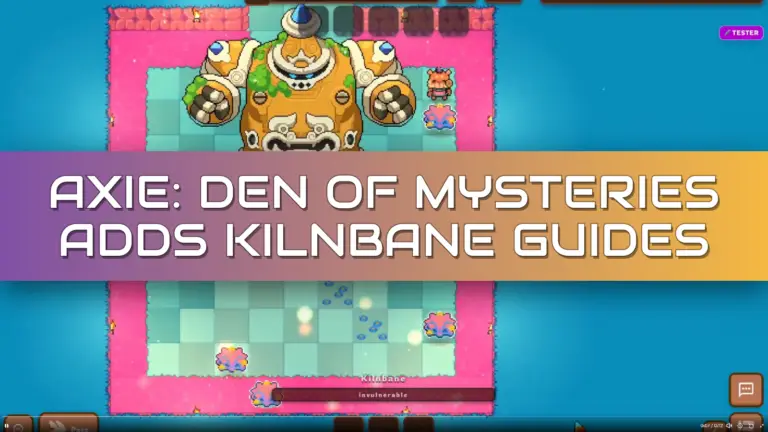 Axie: Den of Mysteries Adds Kilnbane Guides
Axie: Den of Mysteries adds handpicked guides to help players beat the Kilnbane boss. Ronin token price is observed in the wider gaming market.
September 25, 2026
Axie: Den of Mysteries Adds Kilnbane Guides
Axie: Den of Mysteries adds handpicked guides to help players beat the Kilnbane boss. Ronin token price is observed in the wider gaming market.
September 25, 2026
 YGG Token Exits Abstract on October 9, Before the Chain Closes
The YGG token's Abstract pool closes on the 9th of October 2026. YGG said in August that tokens from its first buyback were still…
6 days ago
YGG Token Exits Abstract on October 9, Before the Chain Closes
The YGG token's Abstract pool closes on the 9th of October 2026. YGG said in August that tokens from its first buyback were still…
6 days ago
Settle the broken continent of Axoma as an Architect: work Land that churns out resources, craft gear, glyphs and potions, and lead Heroes through turn-based fights. Heroes belong to one of five classes (Knight, Mage, Rogue, Archer or Druid) and learn skills and equip gear as they level. Take them into dungeons whose sections reshuffle every week, gang up on world bosses that share one health pool across every player, or fish, mine and gather herbs between quests. In Tribal Conflicts you side with the Sproutkin, Emberclaws or Flowtails for group PvP, and the Arena runs its own tournaments. Pawtato Land […]
Lock in a squad of mushroom champions and battle through turn-based PvE and PvP across Arborethia, joining guilds and running quests for loot. Champz plays in your browser and on Android, where the 9,000 collectible Champz you fight, forage, and craft with are NFTs you own and trade on the marketplace. Hold the $CHAMPZ token on Base to earn Truffles you can swap for ETH. Free to play.
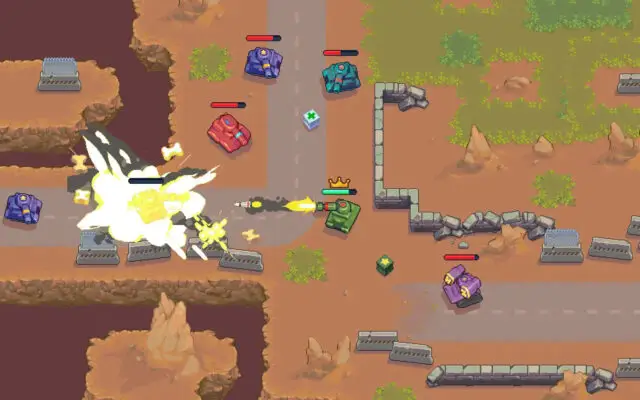
Drop into real-time top-down tank combat where aiming, dodging, and outmaneuvering your opponents wins the match. Think Brawl Stars, but you pilot a tank. Anyone jumps in free, while owning Tank Parts and Dog Avatar NFTs unlocks the full play-and-earn rewards on Sui. Play in the browser on PC or mobile, or grab a build from the Epic Games Store and Google Play.
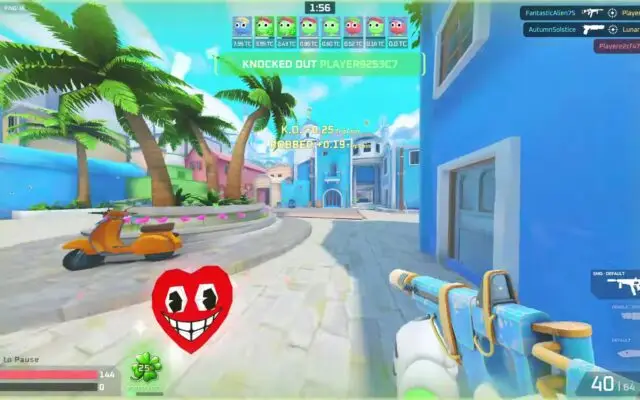
SuperTripLand is a free multiplayer FPS you play in your web browser, with five-minute psychedelic deathmatches and nothing to download. Pick a Deagle, SMG, AK-47, Vanguard or AWP and fight across four maps: Fidelio II, Vertigo Island, Satoshi Shipping Center and Ecstasy Shrine. It runs on desktop and mobile browsers and on CrazyGames. Does SuperTripLand have a token? No. Tripcoin is the in-game currency, and it is not on any blockchain. You spend it on crates, in the market and in minigames such as Daily Spin and Coin Flip. The blockchain side covers cosmetics only, and you need no wallet to […]