











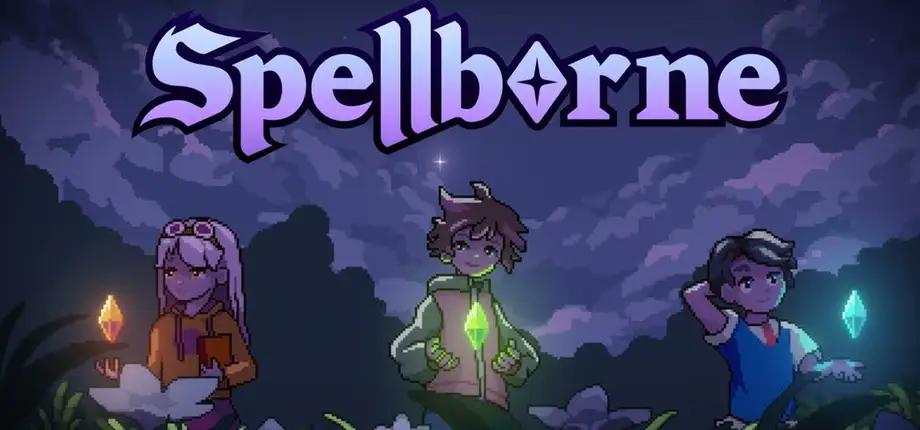
Spellborne
Collect monsters and explore the world of this monster collector RPG. Spellborne plays in the browser and on iOS and Android, and Mon Studios develops...
Nigerian developer Fawaz explains why he builds on Arc, how Nexora caps what an AI agent wallet can spend, and why Last Protocol will price its NFT skins in USDC.
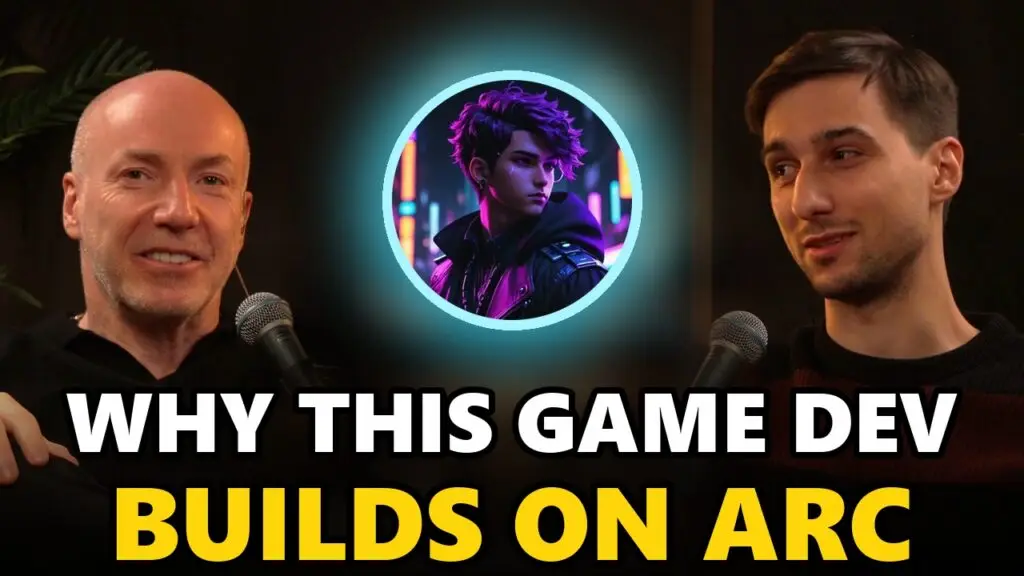
On this episode of the JRPG Crypto Games Podcast, we talk to Fawaz, a software and game developer from Nigeria who builds on Arc, the new blockchain that runs on USDC for gas. He walks us through Nexora, which puts spending limits on AI agent wallets and settles USDC payments for apps, and FundArc, a crowdfunding tool where only the backers vote on whether a milestone was met before the smart contract releases the money.
We also get into the Arc plugin he built for Unreal Engine 4, with Unity and Godot next, and his own game, Last Protocol. It is a third-person adventure closer to Far Cry than Breath of the Wild, with paid-entry multiplayer matches at 2, 3 and 5 USDC and weapon skins as NFTs. Along the way he explains why a player in Nigeria can pay in USDC when a debit card gets blocked, and why he picked Base and Arbitrum over Ethereum and Solana.
This transcript has been lightly edited for readability. Speakers are Colorado and July from the JRPG team, with our guest Fawaz.
Colorado: Hello everybody, and welcome to the show. Today we are joined by Fawaz, who is developing a bunch of really cool apps on the Arc protocol lately. So we’ve got a few questions for him. Fawaz, could you introduce yourself?
Fawaz: Okay, my name is Fawaz, and I’m a software and game developer. I build on both Web2 and Web3 platforms.
July: Yes, and we found you on the Arc forums.
Colorado: Yes. Cool, so my first question is about Arc. This blockchain is very new. As a developer, when I’m looking at what I’m going to work on, why would I choose it? Because you chose to do a lot of stuff on the Arc chain. So why would anyone choose to do something on Arc versus doing it on Avalanche or on Ethereum or on Solana or on Base or any of the other chains? What is it that drew you to the Arc chain?
Fawaz: Okay, one of them, at first, when I started building, was developer tools. Arc had a lot of developer tools, friendly developer tools to help onboard new developers into the blockchain, into building on their blockchain. So that was one.
And two is the USDC on Arc. It’s the first chain making use of a stablecoin, especially a stablecoin like USDC, as gas fees, instead of making use of its native currency, which costs a lot more in gas fees. And also speed. Let me just say speed. The USDC and the developer tools attracted me to the blockchain.
July: And I think it attracted a lot of people, actually, because the developer community in the Arc forums was pretty active. I visit forums here and there, and some of them are kind of dead, you hear crickets. But in the Arc forums, it seems like people are posting and developing new things daily. Some more groundbreaking, some less, but people are active, doing interesting things.
Fawaz: Lots. Even on Discord. Yeah, a lot of active developers in the dev chat, building different cool products.
July: Yeah, I think that’s super interesting.
Fawaz: Even, I think, an AI… I can’t remember their name, but Incentive and one other firm contacted me about agentic payments, which is what Nexora stands for. I talk about the x402 facilitator, Nexora’s x402 facilitator. They wanted something to work with, where the Nexora facilitator can aid their agentic payments.
So there’s a lot of developer community on Arc, very, very active. Unlike other blockchains, you can easily just chat with the team and they assist you.
Colorado: Yeah, we definitely saw an active community.
Fawaz: They have a Circle console where you can manage your USDC wallet, their controlled wallets, your Circle entity secret key. Have you heard of that? To manage your agents, you can easily watch your agents’ transactions inside the Circle console. You can manage a lot of things inside the Circle console. Even learning how to make use of their kits, their bridge kits, their swap kits, their on-ramp kits. All those developer tools are available.
Colorado: Wow, I haven’t seen the console yet.
Fawaz: There’s quite a lot to attract.
Colorado: Is it a website, or is it an application? What is it?
Fawaz: Oh, Circle.com. No, a website. A website. Circle.com.
Colorado: And what’s the URL?
Fawaz: Circle.com, forward slash console. Yeah, I think that’s it.
Colorado: Uh-huh. Okay. Cool. So specifically when it comes to video games, why is Arc a good fit for video game developers?
Fawaz: As a video game developer on chain, let’s say you want to go solo. You might not have the knowledge of smart contract development. You really have the knowledge of game development. Just by making use of AI and their AI-ready tools, you can actually develop the parts where you need the smart contract to work without even knowing how to develop smart contracts.
And also, making use of USDC for transactions or for purchasing in-game items is going to be very, very easy. In my country, sometimes if you want to purchase things abroad, it might be blocked regionally due to restrictions when you are using your debit card. But when you are making use of USDC for payments, there’s not going to be any sort of regional restriction whatsoever.
So if I build a game and I’m not making use of USDC, gamers from my country in particular might not be able to participate in my game, which is going to reduce my revenue from my game. But if I’m making use of USDC, of course, it’s going to be easily accessible to users here in Nigeria. So that’s a wider market for your games.
July: So it seems like accessibility is one of the key points for going with Arc, or using USDC in general, over just a regular fiat currency.
Colorado: Wow. So let’s talk about the on-ramp. Let’s say Grandma Moses in Kansas is playing a farming game on her phone, right? And there’s something that she needs to buy in USDC. She has a credit card. She has a checking account. She has a bank account. She has everything from the old world, but she doesn’t have anything from the new world. What is available from the Arc blockchain to get money from her and convert it to USDC, so she could buy some seeds in the farming game that she’s playing?
Fawaz: So you’re a game developer and you are targeting a user like that, a Web3 user who is new to this Web3 world. You integrate the on-ramp kits. With the on-ramp kits, the user can easily use their card to purchase USDC, or just convert their local currency to USDC. And it’s easier to transfer the USDC. They don’t have to know how to connect [inaudible] wallets or connect MetaMask wallets.
The kit, the user-controlled wallet built by Circle, will create something just like an MPC wallet, but with your social accounts, for example your Google account. When it creates it, it creates a wallet automatically. So when you on-ramp with your local currency, it gets deposited into that wallet. And as long as it’s inside that wallet, you can easily purchase any item in the game.
July: That sounds great!
Fawaz: So she doesn’t have to worry about going to a CEX or a DEX to purchase it and transfer it, where she can even make a mistake and transfer it to another wallet, the wrong wallet. And in the process, let’s say, for example, she needed to buy ETH to purchase an item within the game. Even before she can purchase ETH, she has to go and buy it first. Then after purchasing it, transferring it from one place to the other is going to cost a lot of fees, before she’s able to transfer ETH into the game.
But with the Arc on-ramp kit and USDC as the token, USDC as the fees, everything just goes seamlessly. Just connect your card, get debited, it gets converted to USDC. Just purchase the item and continue to play your game.
July: Wow! So Grandma Moses from Kansas can use her old-world physical wallet to get her seeds in her game. That’s pretty cool!
Fawaz: Yeah.
Colorado: Sounds exciting!
Fawaz: Yes! So one of the main ideas of Arc is fixing the problem of the old financial institutions. Being able to transfer money without any restriction.
July: Yes, being able to transfer money without any restrictions.
Colorado: Yes. So you had some really impressive work that you did, some stuff outside of gaming and in gaming as well. I saw you were working on something called Nexora, which seems really timely. A way for agents to interact in USDC and stuff. So tell us a little bit more about the Nexora project. What’s the vision there?
Fawaz: Nexora. Okay. Nexora started by solving the same kind of issue we have in Nigeria, the movement of USDC, or movement of money, or subscriptions. And also agent subscriptions.
For example, one of the team members was performing a transaction using agent wallets. He was trying to use the agent wallet to pay for a subscription, I think a [inaudible] subscription or so. He had already funded the agent wallet with some amount in USDC, and he gave the agent wallet some prompts, and the agent wallet did the task. But there were no controls. For example, a transaction cap, that is, the amount the agent should spend per transaction. Or the number of times it should execute that transaction.
So the agent can, let me say, malfunction and continue executing that transaction, or paying for the API, till it runs out of USDC. You can fund your agent wallet to do a lot of things, and before you know it, the agent has already used up the whole USDC on one thing that it was meant to do only once. And it does it over a period of time, because there are no controls or limits set on the agent wallet. So that was one of the first ideas Nexora was built on.
Then later I decided that agents can do more than paying for or interacting with paid APIs, and that is settling USDC for apps on chain. So whether it’s a Web2 application or a Web3 application, an agent can help settle USDC on chain. For example, a Web2 developer may be building a shopping website within a country. He doesn’t know how to build smart contracts, but he wants Web3 users to be able to patronize it. So this time around…
Colorado: Well, you’re breaking up. I lost that last sentence. He doesn’t know how to…
Fawaz: Okay, he doesn’t know how to build smart contracts. So there’s this Nexora SDK. All they have to do is integrate the Nexora SDK into their application. Users just pay like they pay for the product normally, just purchase the product. But if they don’t want to use their local currency, they can make use of USDC. When they send USDC, Nexora settles it for them, then the application can verify the settlement immediately, as fast as the blockchain works. So immediately they can verify the settlement and ascertain to the user that this product has been bought.
That’s the same SDK that I told you about that is integrated into a game SDK, also just for settlement. So the x402 facilitator collects the USDC, settles it in… And I didn’t… The x402 facilitator is not even restricted to Arc alone. I also embedded Base and Arbitrum. But the only limitation for Base and Arbitrum is that the user will still need the native token to execute transactions on Base and Arbitrum.
That’s why I said there are a lot of things to attract game developers, users and software developers to building on Arc or to using Arc, because they don’t have to have any other currency to execute transactions on the blockchain. So if a developer wants to make use of the SDK, you just integrate the SDK into the application. Users can easily buy products with USDC without worrying about getting any other native currency. So that’s what Nexora is about. Settling USDC for agents and other USDC applications.
Colorado: Wow. That’s a really timely project in 2026. So the other one that really interested me was FundArc. What I liked about FundArc, at least from your description of it, is that you’ve basically got a voting system with milestones. So I could say, all right, I’m going to fund someone for 5,000 USD to make a mod for some game that I have, and the community is going to vote on whether this mod is good enough. And the milestones are, I’ll give him 5,000 when he does 2 levels and 10,000 when he does 10 levels, or some kind of milestone like that.
But I love the fact that the funds could be held in the smart contract, and you could put the vote out to a group of people. I just think this is a really smart idea for funding and milestones. So tell us more about FundArc and what’s going on with this project.
Fawaz: Okay. It’s for grants, just like you said, allowing milestone-based grants for anyone: developers, creators, game developers, gamers and so on. So aside from trusting the smart contract, when the community votes, the yes votes have to be more than the no votes before the smart contract can release the funds for the agents, for the… sorry, for the creator and for the developers.
But aside from that, the person requesting the grant has to submit evidence before users or the community can even think of supporting it. So instead of the community verifying by themselves, we have a way to make agents actually help them verify, to some extent.
And also, if those community members are not available at the time the milestone or the evidence or proof of what was requested gets verified, users can delegate an agent wallet within FundArc, and that agent wallet helps them contribute to the campaign. They can just set the amount they want the agent wallet to contribute.
For example, let’s say on X, the creator, or let me just use myself, Fawaz, as an example, decided to create a campaign for so-and-so. And somebody comes across it today and is like, oh, I like the idea. It’s possible that he might not even come back to fund it in a couple of weeks, when the milestone may have been verified by other community members or agents. So he can lock the USDC with the agent wallet, and automatically the agent wallet knows that if this milestone has been verified, it will release the funds into the smart contract for the creator to be able to claim. But if it’s not verified, the USDC still remains in the agent wallet, and the user can claim it back.
July: Wow. So this really solves the age-old problem with crowdfunding platforms, where you have to trust the person creating the project. You give the funds and you hope for the best. Maybe they deliver, maybe they don’t. And maybe you get a refund, maybe you don’t.
Colorado: Oh, and so the community, is this the same people who are funding? So you know that those are the right people voting? Is that how that works?
Fawaz: No, you might not know who is funding. First of all, you can share your campaign with anyone. You can just copy the campaign link and share it with anyone who might be interested in funding your campaign.
Colorado: But who gets to vote?
Fawaz: So first of all, they are interested in your campaign. Only the contributors.
Colorado: Uh-huh.
Fawaz: Only those who fund the campaign.
Colorado: Wow. This totally solves the Kickstarter problem.
July: Yeah, for sure. That sounds awesome.
Colorado: So you could say, okay, we’ll fund you for $100,000, but you’re going to get the first $25,000 when you hit this milestone, and then the next one. Wow. That’s really good.
Fawaz: And only they can. No one else can vote. Only the contributors.
Colorado: That’s a smart project.
Fawaz: And even if they want to delegate to an agent wallet, only their agent wallet can vote. Only the agent wallet set up by their own EOA wallet, that is, your normal wallet. They use their wallet to create an agent wallet, which they give access to verify or vote on their behalf. If they don’t do that, nobody’s going to vote for them, so it stays like that.
That’s why we brought in the idea of making the agent wallet vote on your behalf if you are not around. So if the creator was able to complete the milestone and submit the evidence, and maybe a lot of people didn’t come back, their agent wallet can just help them verify and fund the next milestone of the campaign.
July: Mm-hmm.
Colorado: Nice project.
July: Yeah, that’s a really great idea. Good job. Another project that we saw is more directly connected to game development. I saw that you made a plugin for Unreal Engine and Arc, something to connect both. Can you tell me a bit more about it?
Fawaz: Yes. Yeah, the plugin was a little bit basic. I built the plugin with C++ and a little bit of Blueprints, and the Blueprints come with the plugin. So all they have to do is place in their wallet address and make sure their wallet address is funded. It’s already connected. The RPC and everything is already in.
The basic things they can do are fund a wallet and purchase items with the plugin, basic items they wire into their game. And they can mint NFTs within the game, simple NFTs. They can send USDC. For example, the smart contract can reward gamers. So if the plugin is inside your game and you locked in USDC for whoever wins some kind of level or stuff like that, you can reward those gamers by sending USDC to the wallet that you want to reward.
So those are the basic things. Sending USDC, minting NFTs, connecting to the blockchain of course, and rewarding users. The next step up is to be able to purchase a lot of props, a lot of equipment within the game. To settle transactions very fast, so that users can use socials to log in and pay for any equipment within the game. And also to expand it to more game engines, Unity and Godot.
Colorado: Nice.
July: So it’s not just Unreal anymore. Unity and Godot as well. Is that Unreal 5 or Unreal 4?
Fawaz: Still Unreal 4 at the moment. My Mac can’t run Unreal 5 at the moment. So I can start with Unreal 4, but the moment I can run Unreal 5, that’s not going to be a problem. Just compilation and builds. It works, then you deploy, then it will be available for users to use.
Colorado: So Godot, Unity and UE4.
July: And UE5 in the future, potentially.
Colorado: Yes. So you’ve got a game that I think is coming out soon, Last Protocol. Let’s talk about this game. What’s going on with it? What are you willing to share?
Fawaz: There’s no story tied to the game yet. I’m still working on the mechanics. I want it to be very, let me say, adventure-like. More of an adventure. I have a lot of realistic movements within the game. A third-person player game. I’ve done a lot on the weapon system, a lot of weapons, and a lot of things with the AI. I want to make something that feels real when the player is playing, like item pickups, you know? A lot of things.
But aside from that, I don’t want it to be too much of an open-world game. So, see, I don’t know which kind of game I can give as an example. I’m using Unreal Engine for it at the moment.
Colorado: So it’s a 3D game or a 2D game?
Fawaz: No, 3D, third person.
July: Third person?
Fawaz: Third person.
July: Realistic movement, adventure. I’m thinking something like Breath of the Wild, but maybe more realistic. Am I on the right track?
Fawaz: Not really wild. Let me reference Far Cry.
July: Far Cry, okay.
Fawaz: But, you know, Far Cry 4, Far Cry still deals with the wild more, and I’m not really going that much into the wild. There might be a little bit of it for adventure, but there are going to be city places within the game. And it’s going to have a story. And it’s also going to have multiplayer. And I’m also thinking of lovers of FPS. Yes, they should be able to switch between FPS mode and TPS mode.
Colorado: And how does crypto fit into this game?
Fawaz: Oh, crypto is going to fit in only in the multiplayer part. So skins, weapons, and there’s going to be competition. And I’m thinking of wagering. Someone actually gave me the idea.
For example, we create a competition and set a price. Every user comes into the multiplayer game with a price, a fixed amount. Let me say we are going to have three tiers: bronze, silver and gold. So maybe 2 USDC for the bronze tier, 3 USDC for the silver tier and 5 USDC for the gold tier. So a lot of them come into the game, play the game, then maybe…
Colorado: So you pay to enter?
Fawaz: Yes, they pay to enter the game. The top five or top ten get a share of the whole amount.
July: That sounds very competitive.
Colorado: Sounds like fun.
Fawaz: Yes.
Colorado: Any NFTs or anything else?
Fawaz: Yeah.
Colorado: Or is it just competing for prizes based on the pay to enter, the entry fee?
July: Well, he said cosmetics.
Colorado: Oh, pay for cosmetics.
Fawaz: No, they are going to be NFTs. Yeah, and they are going to be skins for their weapons. And even costumes.
Colorado: And what chain are you looking at for this one?
Fawaz: Arc. And if I’m going to make use of any other chain, I’m thinking of Base and Arbitrum also, because of USDC. So to solve the issue, if the game has a lot of funding at the end of the day, we can set up Circle Paymaster for gamers making use of Base and Arbitrum. I don’t know if you’ve heard of Circle Paymaster before. Circle Paymaster is set up to pay gas for your users coming from other blockchains, as long as they are making use of USDC.
July: Interesting.
Colorado: What’s the name of it again?
Fawaz: Circle Paymaster.
July: Circle Paymaster.
Colorado: Circle Paymaster. Aha.
Fawaz: Yeah. Just like you have Circle Gateway. Just search it up. Circle Gateway is for moving USDC, or moving assets, between chains. And Circle Paymaster is for almost the same thing, but it pays for gas on behalf of the user. And there are so many other products like that.
So we’re looking to make use of Circle Paymaster for that aspect. If there’s any funding, we can host Circle Paymaster for users coming from other blockchains, as long as they are still going to make use of USDC. But Arc is going to be the default to start with, since it’s going to be easy to integrate and easy to use.
Colorado: Wow. Now, on a couple of things. You mentioned Base, Arbitrum and Arc. Why not Ethereum and Solana?
Fawaz: Ethereum, for example, is going to cost a lot of fees. Base and Arbitrum are L2s, so fees are much lower than on Ethereum, which is an L1. And even though Solana has fairly low fees, it’s still going to bring the effect of making use of… For example, when we build the game on USDC technologies and we already have Arc, we already have Base, and we already have Ethereum, now we have to try to build new technology around Solana to execute the transactions.
So we just want to make it easy and accessible for our users by purchasing their assets in USDC. No volatility on payments, you know. For example, they want to purchase a skin, and it costs $50 today, and tomorrow it jumps up to $120 just because the token’s price is rising. Or maybe they have NFTs or props that they want to sell within the game. They might list one for $500 today, and because the price of the token dropped, the price of the asset they want to sell also dropped. But if it’s sold in USDC, the price remains the same.
Colorado: So it’s about the lowest fees that you’re looking for, and stability.
July: Stability, yeah.
Fawaz: Yes. Yes.
Colorado: Wow. Well, that’s all the questions that we had for you. Do you have anything else that you wanted to add, Fawaz?
Fawaz: No, not at all.
July: Do you have anywhere you want people to follow you?
Fawaz: I would like to… Maybe my X or my LinkedIn.
July: Okay. We can put those into the description.
Colorado: It’ll be in the description for the video and podcast.
Fawaz: Okay, fawazdevs.
July: All right.
Fawaz: So I wanted to ask a question about your former studio. What kind of games have you guys released? Were they 2D or 3D games? And are they still available? I play a lot of games, so I always want to check out some games and play them.
Colorado: Oh, in a former life, we worked as a game studio. But right now the only thing that we’re doing is putting this show together, and we’re hosting games for other people on our website. But I will send you a link to some of the stuff that we did with our previous projects.
Fawaz: Okay.
Colorado: And I guess we’ll include that in the notes for the show as well. Cool. Well, thanks again for joining us, Fawaz. It was a pleasure talking to you, and you’ve got some really exciting projects that you’re working on. I wish you the best of luck in the future. And that’s everything for today. Thank you, everybody, for listening.
Fawaz: Thank you.
July: Thank you very much.
Fawaz: Thank you very much.
July: Thank you.
◆ ◆ ◆
 Ronin Treasury Vote: RON Holders Decide $177K Plan by November 24
The Ronin treasury vote on RGP-1 would put about $177K into Katana pools. Ronin's own replay says it would have trailed holding by $7.3K…
2 days ago
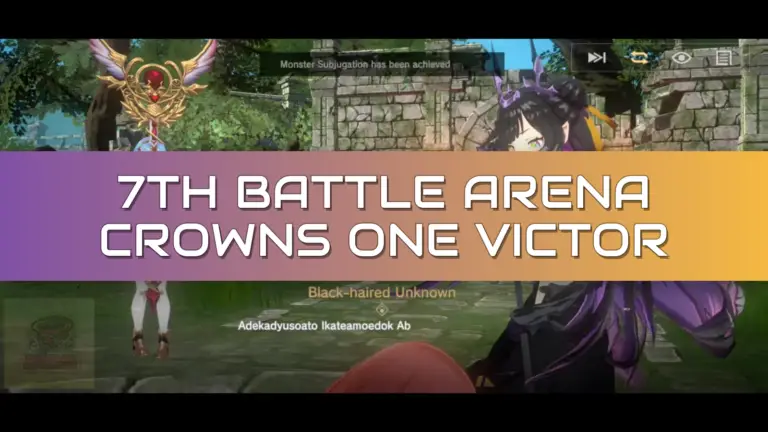 Last Memories’ 7th Battle Arena Crowns One Victor
De:Lithe Last Memories launches 7th Battle Arena, where one victor will be crowned.
August 17, 2026
 Rumble Arcade Announces $1500 Finale Prize for Community Clash Season 1
Rumble Arcade’s Community Clash Season 1 has reached its climax, with top clans set to compete for a $1,500 prize pool in a multi-day…
April 3, 2026
Build your village, train troops in the Barracks, and raid other players for their gold. Pour the loot back into upgrades, hire more builders, and...
Build a deck and battle other players in a competitive card game. Parallel runs on Windows through Steam and the Epic Games Store, and on...
Activate a land plot, assign your Axies to it, and let them work hourly ticks while rarity, accessories and evolved parts drive your plot’s Atia’s...
Plant crops, raise animals, fish, and craft rare gear on your own pixel-art island. Sunflower Land runs in your browser on desktop or phone, and...