

Pixels
Make your home in a sprawling pixel-art world: farm crops, raise animals, gather resources, and level up skills alongside thousands of other players. Pixels runs...
Crypto games now have 102 million players, 72% YoY growth, and $600+/month earners. Here's everything you need to know about blockchain gaming in 2025.
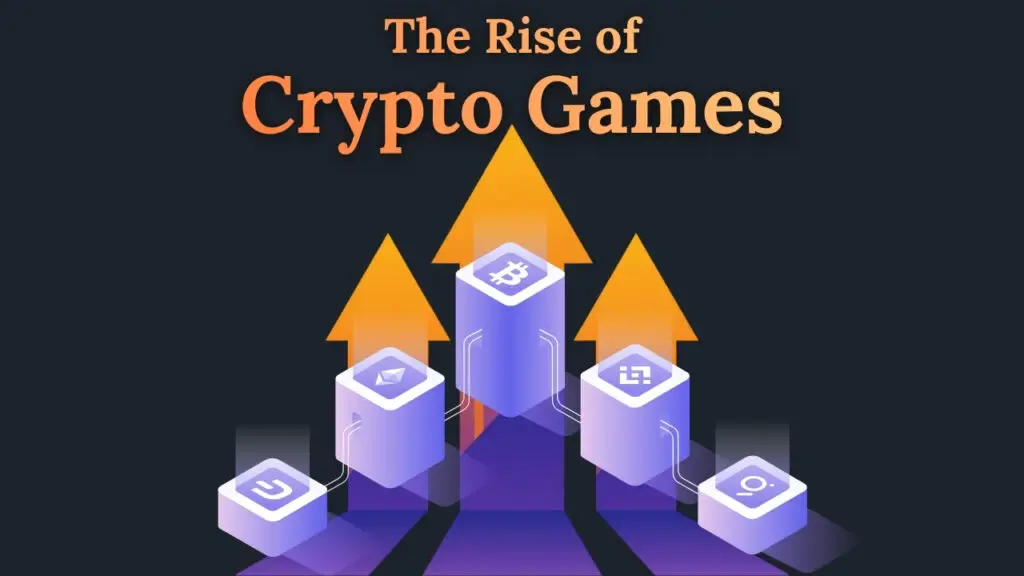

Crypto games, also known as blockchain games, have rapidly evolved from experimental prototypes into one of the fastest-growing segments of the global gaming industry. By combining traditional gameplay with on-chain ownership, tokenized economies, and decentralized marketplaces, crypto games are reshaping how players interact with digital worlds and extract value from play.
Once dismissed as speculative or overly complex, crypto games in 2025 now attract tens of millions of active users worldwide. Improvements in user experience, mobile accessibility, and sustainable game economies have fueled this growth, positioning crypto gaming as a long-term pillar of interactive entertainment rather than a passing trend.
Experimental foundations (2017–2020)
The earliest crypto games, such as NFT-based collectibles and simple browser games, proved that digital asset ownership could exist on-chain. However, slow networks, high transaction fees, and shallow gameplay limited adoption to crypto enthusiasts.
Play-to-earn explosion (2021)
During the 2021 crypto bull market, play-to-earn (P2E) games reached mainstream visibility. Millions of users joined crypto games for the first time, motivated by token rewards and NFT ownership. At its peak, blockchain gaming accounted for over 40% of all blockchain activity, surpassing DeFi in daily transactions.
Infrastructure and design maturity (2022–2024)
Following market corrections, developers pivoted toward long-term sustainability. Layer-2 scaling solutions, alternative blockchains, and integrated wallets dramatically reduced friction. Game design shifted away from pure earning mechanics toward engagement, progression, and competitive depth.
Sustained engagement
By 2025, leading crypto games demonstrate live-service metrics comparable to traditional mobile and online games. Retention is driven less by speculative rewards and more by gameplay loops, social systems, and asset-based progression.
Resilient user growth
Despite volatility in crypto markets, blockchain gaming user numbers continued to rise steadily, signaling that demand is no longer tied solely to token prices. The sector increasingly mirrors a stable live-service gaming ecosystem.

Ownership as a core driver
Crypto games differ fundamentally from traditional titles by allowing players to own, trade, and monetize in-game assets. This transforms players from consumers into participants in digital economies.
Key economic indicators (2025):
Crypto gaming is increasingly positioned as a hybrid of entertainment, digital labor, and online commerce.
Asia-Pacific & Emerging Markets
North America & Western Markets

Ethereum remains the leading platform due to its deep liquidity, established tooling, and strong NFT infrastructure. BNB Chain and Polygon follow closely, benefiting from lower transaction costs and faster execution, which are especially important for high-volume and mobile-first games. The presence of multiple networks underscores a multi-chain gaming ecosystem, where developers increasingly choose platforms based on scalability, cost efficiency, and player experience rather than a single dominant chain.
Marketplace & infrastructure metrics:
These numbers reflect a maturing ecosystem focused on interoperability, scalability, and player-friendly design.
Regulatory clarity and onboarding simplicity remain challenges, but no longer existential threats.
Crypto games have evolved from speculative experiments into a structurally significant segment of the global gaming industry. With over 100 million players, strong retention, and increasingly sophisticated live-service design, blockchain gaming now stands alongside mobile, PC, and console gaming as a distinct ecosystem.
While hurdles remain, particularly around regulation, UX, and economic balance, the data strongly suggests continued growth throughout the decade. As infrastructure improves and game design matures, crypto games are poised to remain a core driver of innovation in digital entertainment.
◆ ◆ ◆
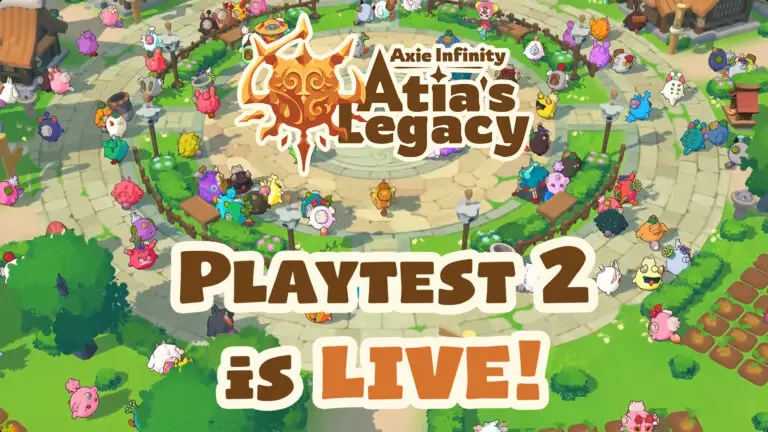 Atia’s Legacy Playtest 2: Battle It Out in Lunacian
Atia's Legacy Playtest 2 goes live in Lunacian, the Axie Infinity universe — here's what the new playtest adds for players.
April 8, 2026
Atia’s Legacy Playtest 2: Battle It Out in Lunacian
Atia's Legacy Playtest 2 goes live in Lunacian, the Axie Infinity universe — here's what the new playtest adds for players.
April 8, 2026
 Fishing Frenzy Shuts Down: Servers Closing June 25
Fishing Frenzy closes on June 25, leaving fans with mixed feelings and USDC refunds.
June 15, 2026
Fishing Frenzy Shuts Down: Servers Closing June 25
Fishing Frenzy closes on June 25, leaving fans with mixed feelings and USDC refunds.
June 15, 2026
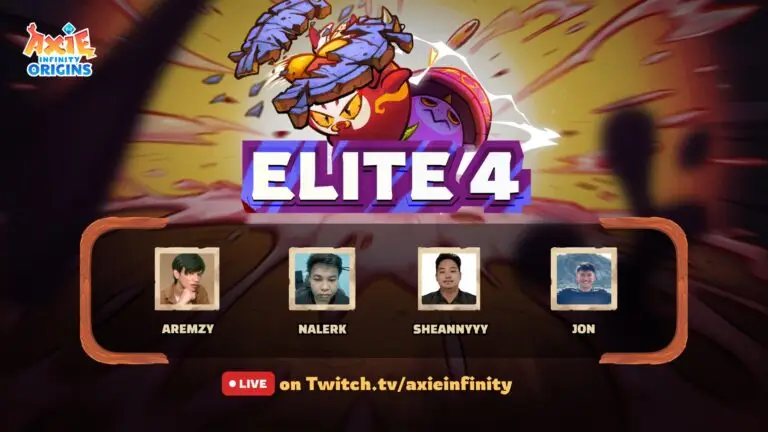 Axie Origins Elite 4 Live: Four Battle for Season 16
The Axie Infinity Elite 4 are live. Season 16's top handlers clash for a 1200 AXS prize pool and an Origin Axie. Stream it…
March 30, 2026
Axie Origins Elite 4 Live: Four Battle for Season 16
The Axie Infinity Elite 4 are live. Season 16's top handlers clash for a 1200 AXS prize pool and an Origin Axie. Stream it…
March 30, 2026
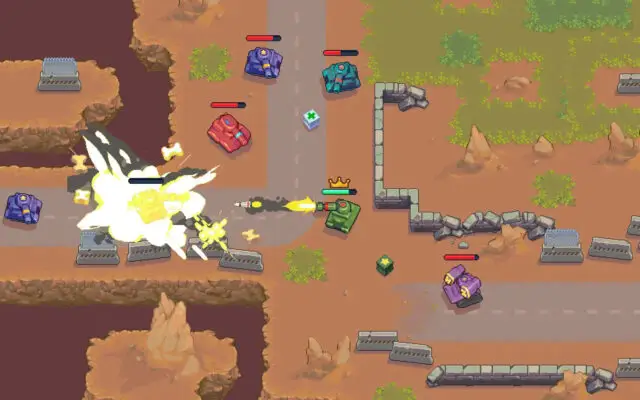
Drop into real-time top-down tank combat where aiming, dodging, and outmaneuvering your opponents wins the match. Think Brawl Stars, but you pilot a tank. Anyone...
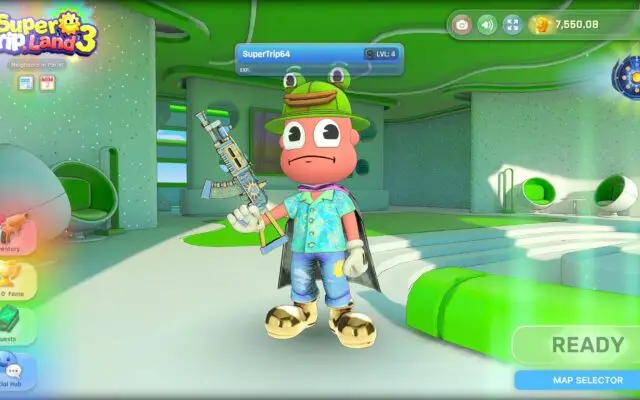
Spawn into a psychedelic free-for-all and frag your way across three themed worlds. SuperTripLand is a free browser FPS on Base with five weapons, character...
Open your own shop in a 2D sandbox where the AI-driven NPCs remember you and shift their moods based on how you treat them. Craft...

Grow your crops, mine Pow, fight bosses, and trade through the in-game shop in a live market other players move with you. Five classes feed...